Methods
The methods our therapists work with.
Below are the methods our physiotherapists and occupational therapists work with. Each therapist’s individual training is listed in their team profile.
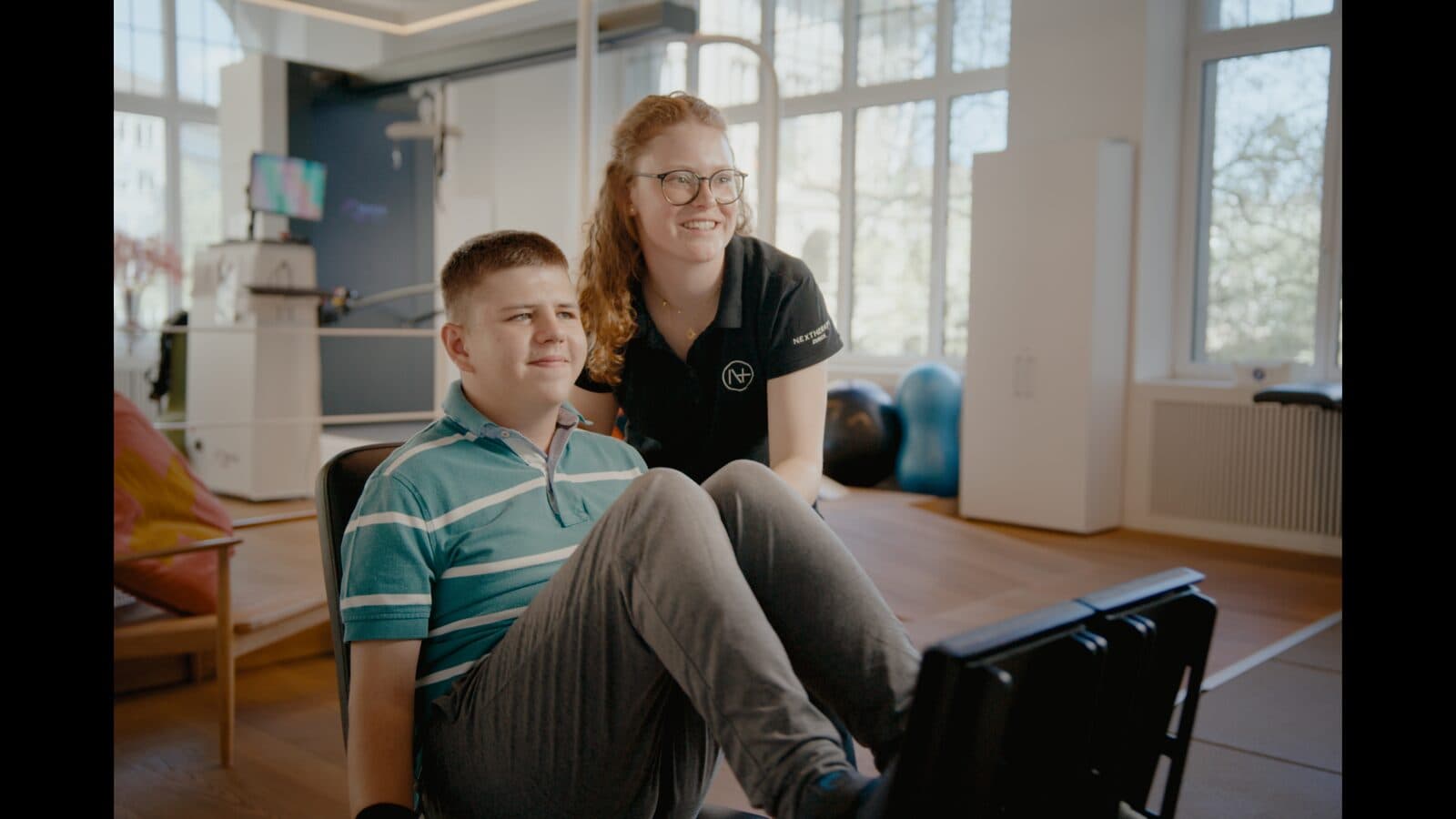
ADL and daily living training
Suitable for children
Practising everyday tasks such as dressing, eating and personal care, towards the greatest possible independence.
Amplitude-based training for Parkinson’s
An intensive approach for Parkinson’s disease that trains large, deliberate movements to counter the small, slow movements the condition causes.
Augmentative and alternative communication
AAC
Suitable for children
Picture boards, signs and speech devices that give children who speak little or not at all a way to communicate.
Baby handling and parent guidance
Suitable for children
Parents learn to carry, position and play with their baby in ways that support healthy development. Includes baby shiatsu.
Backwards chaining
A task is broken into steps and learned from the last step backwards, so every practice ends in success. Used for severe cognitive impairment.
Bobath
Suitable for children
A hands-on concept for people with damage to the brain. The therapist guides movement with their hands to rebuild posture, balance and control in everyday activities. Used in physiotherapy and occupational therapy, for adults (IBITA) and for children (EBTA).
CIMT
Constraint-Induced Movement Therapy
Suitable for children
The stronger arm is restrained so the weaker arm is used intensively in everyday tasks, which drives recovery of arm and hand function.
Clinical mat Pilates
Exercises on the mat that strengthen the core and improve posture and control.
Clinical Neurodynamics
Assessment and gentle mobilisation of irritated or restricted nerves, to reduce pain and tingling.
DMI
Dynamic Movement Intervention
Suitable for children
The therapist moves the child through challenging positions to trigger active, automatic reactions. This builds strength, balance and motor milestones, also in children still too small for robotic systems.
DNS
Dynamic Neuromuscular Stabilisation
Suitable for children
Uses the positions a baby passes through in healthy development to train breathing, core stability and movement control. Used here in the treatment of children.
Gait analysis
Suitable for children
A detailed look at how a person walks, to find the cause of gait problems and aim therapy precisely. Trained in the Gehen verstehen courses, including the advanced paediatric level.
HoDT
Specialised hand therapy after damage to the brain or spinal cord, to regain grip, fine motor control and use of the hand in daily life.
Hypnosis
Used alongside physiotherapy to ease pain, reduce anxiety and support relaxation.
Manual therapy
Suitable for children
Hands-on mobilisation of joints and soft tissue to relieve pain and restore movement.
Marburg concentration training
Suitable for children
A structured programme in which children learn to work calmly and attentively, using self-instruction and tasks built up step by step.
McKenzie Method
MDT
Repeated movements show which directions relieve back, neck or joint pain, and patients learn exercises to treat themselves.
Medical training therapy
MTT
Structured training on equipment, increased step by step, to build strength and endurance.
Motivational interviewing
A conversation technique that helps patients find their own motivation for change and for therapy.
Mulligan Concept
The therapist glides a joint into the right position while the patient moves, so that the movement becomes pain free.
NISE-Stim
Suitable for children
Non-invasive electrical stimulation of the spinal cord through the skin, combined with training, to activate the nerve circuits for walking and movement.
Orofacial therapy
Suitable for children
Treatment of the muscles of the face, mouth and jaw, for eating, swallowing and speech difficulties in children and for jaw problems in adults.
PANat
A pro-active approach to neurorehabilitation with inflatable air splints. They support the arm or leg, reduce spasticity and make active practice possible.
PEOP model
An occupational therapy model that looks at the person, their environment and the activities that matter to them, so therapy is planned around real life.
PNF
Proprioceptive Neuromuscular Facilitation
Diagonal movement patterns, manual resistance and targeted touch activate weak muscles and improve coordination.
Sensory integration
Suitable for children
Play-based therapy that helps children process touch, movement and body awareness, as a basis for attention, motor skills and behaviour.
TEACCH
Suitable for children
A structured teaching approach for autism that uses clear routines and visual support to build independence.
Therapeutic taping
Suitable for children
Elastic tape on the skin supports muscles and joints and improves body awareness between sessions.
Therasuit and Spidercage
Suitable for children
A soft suit with elastic bands supports correct alignment, and a frame with elastic cords lets the child practise standing, balance and movement as part of intensive strength training.
Trauma-informed care
Suitable for children
Therapy that takes difficult past experiences into account and creates a sense of safety. Includes EMDR+, EmotionSync® coaching and validation therapy.
Trigger point therapy and dry needling
Targeted pressure or a fine needle releases painful knots in the muscles.
Vestibular rehabilitation
Exercises for the balance organ in the inner ear that reduce dizziness and unsteadiness.
Vibration training
Suitable for children
Standing on a vibrating platform activates the muscles reflexively, to build strength and reduce stiffness.
Yoga
Calm postures and breathing exercises to support breathing, flexibility and body awareness.
Start with a free assessment.
A specialist therapist discusses your situation, your goals and cost coverage with you. Book online or call us directly.