Therapy covered by Swiss health insurance (KVG, IV, UVG & MV).

Technology & Approach

High-intensity therapy that drives recovery.

Clinically proven systems.

Delivered by specialists.

Covered by Swiss health insurance.

11

Systems · Zürich

10

Systems · St. Gallen
Lokomat® Nano

Mobility & Gait

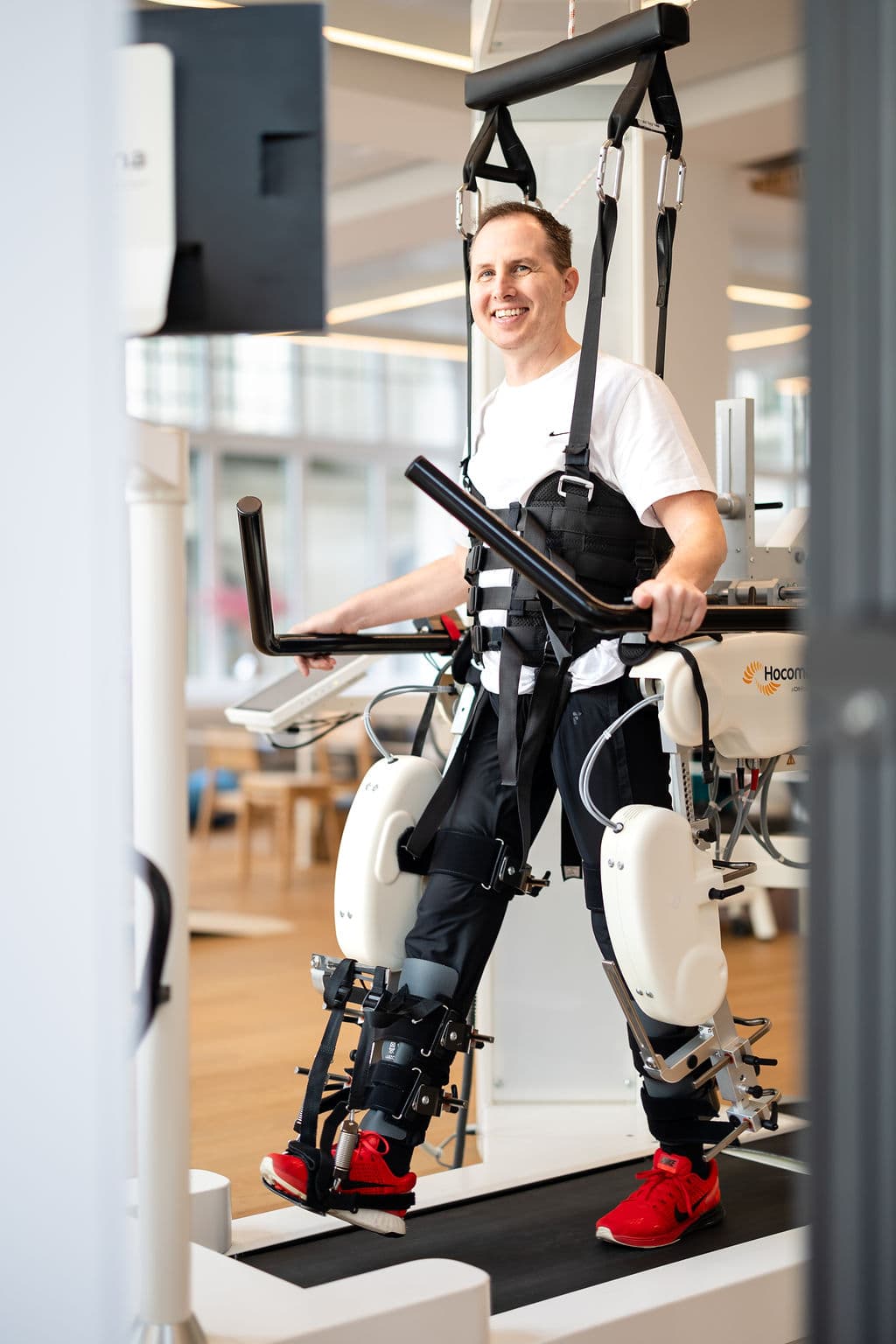
Lokomat® Nano

Robotic Gait Training, Adults

Gold standard
View details →

The world's most extensively researched robotic gait training system. The Lokomat® Pro guides the legs through a precise, physiologically correct walking pattern on a treadmill, delivering thousands of highly repetitive, task-specific gait cycles per session. Real-time biofeedback and adjustable assistance levels allow therapists to progress training intensity as the patient improves.

Clinical Evidence

Over 600 published clinical studies. Efficacy demonstrated across stroke, spinal cord injury, MS, Parkinson's, cerebral palsy, and acquired brain injury.

Key Benefits

4,000+ precisely guided gait repetitions per session
Real-time kinematic and force biofeedback
Adjustable body-weight support and leg guidance
Augmented performance feedback motivates effort
Normative gait data enables measurable progress tracking
Covered by Swiss mandatory health insurance (KVG/IV/UVG)

Conditions Treated

StrokeMultiple SclerosisParkinson'sSpinal Cord InjuryBrain Injury
Lokomat® Pro (Paediatric)

Paediatrics

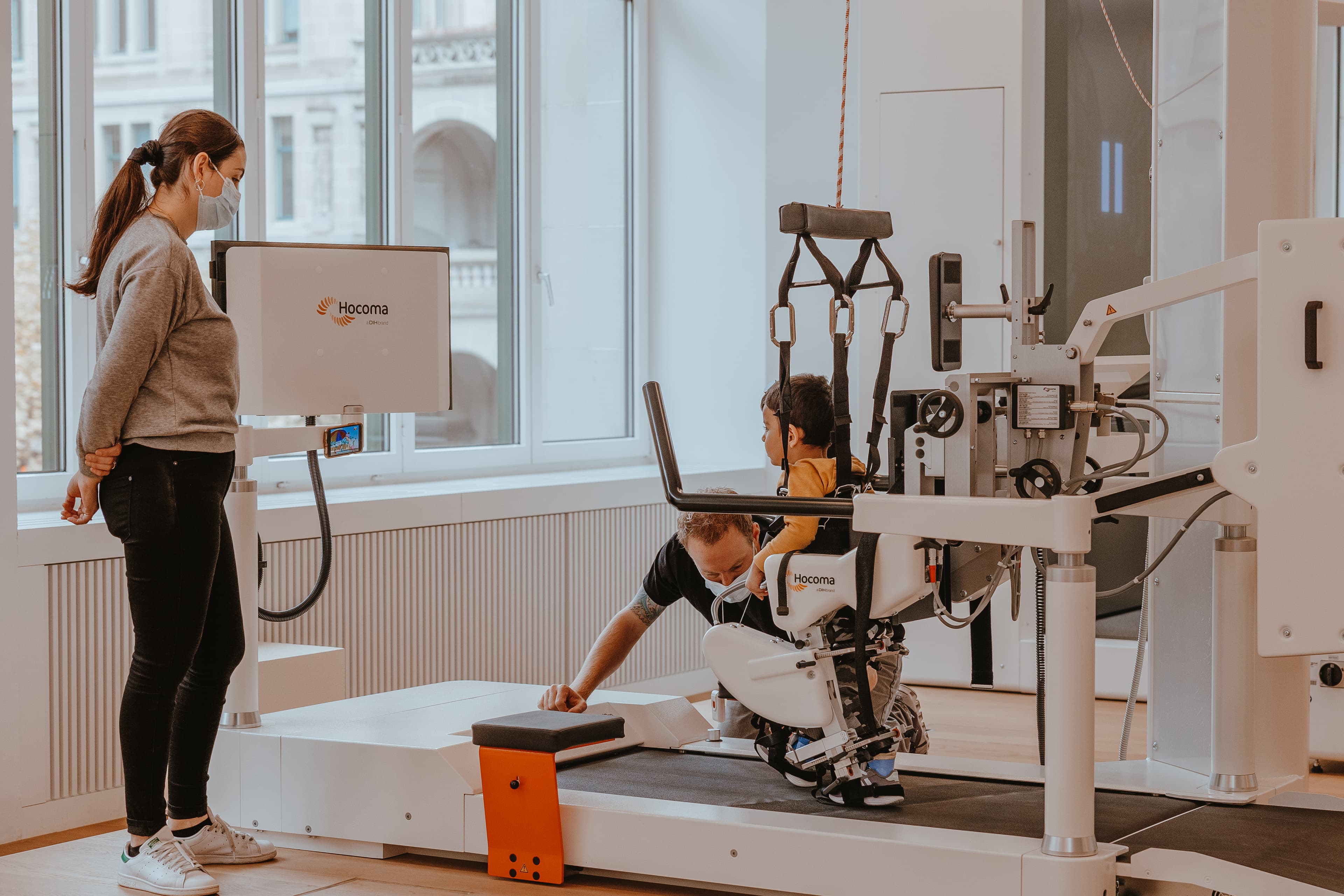
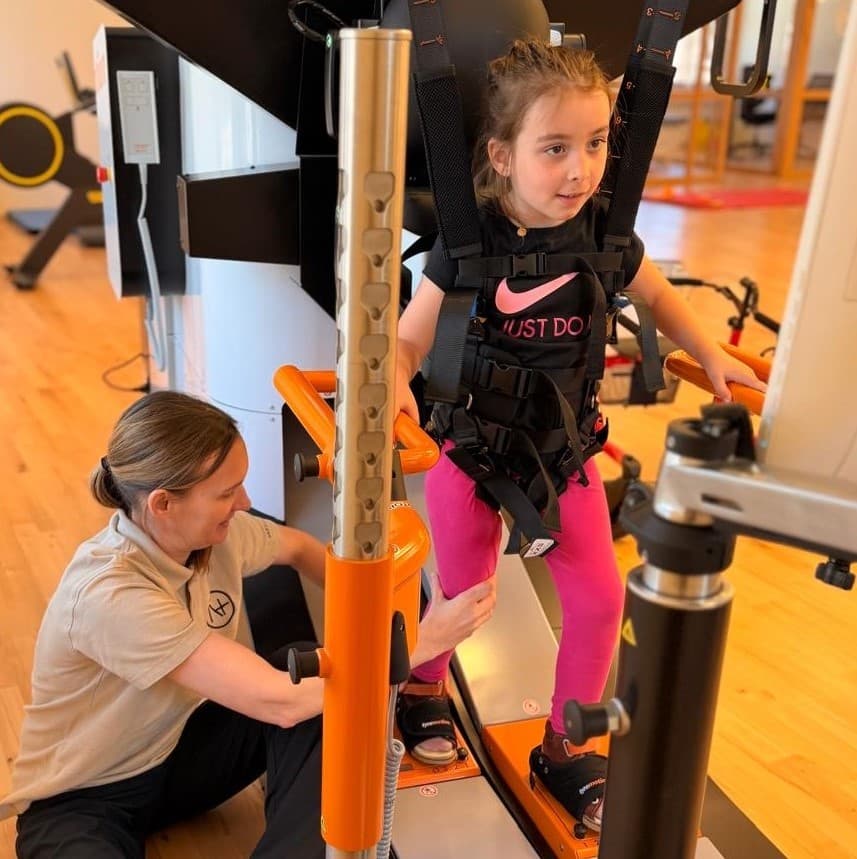
Lokomat® Pro (Paediatric)

Robotic Gait Training, Children

Paediatric specialist
View details →

The Lokomat® Pro used with paediatric orthoses delivers the same gold-standard robotic gait training as the adult system, scaled precisely to smaller bodies and paired with age-appropriate virtual reality environments that turn therapy into play. Eligibility is based on the child's size rather than age. Children engage with interactive games while the system delivers hundreds of precisely guided steps per session.

Clinical Evidence

Clinically validated for cerebral palsy, spinal cord injury, and acquired brain injury in children. Used in leading paediatric rehabilitation centres worldwide.

Key Benefits

Sized for children based on body size, not age
Child-friendly VR game environments maintain engagement
Adapts to growing children over time
Family-centred therapy model with parental involvement
Paediatric-trained specialist therapist team
Covered by Swiss IV and KVG insurance

Conditions Treated

Cerebral PalsySpinal Cord InjuryBrain InjuryStroke
C-Mill®

Mobility & Gait

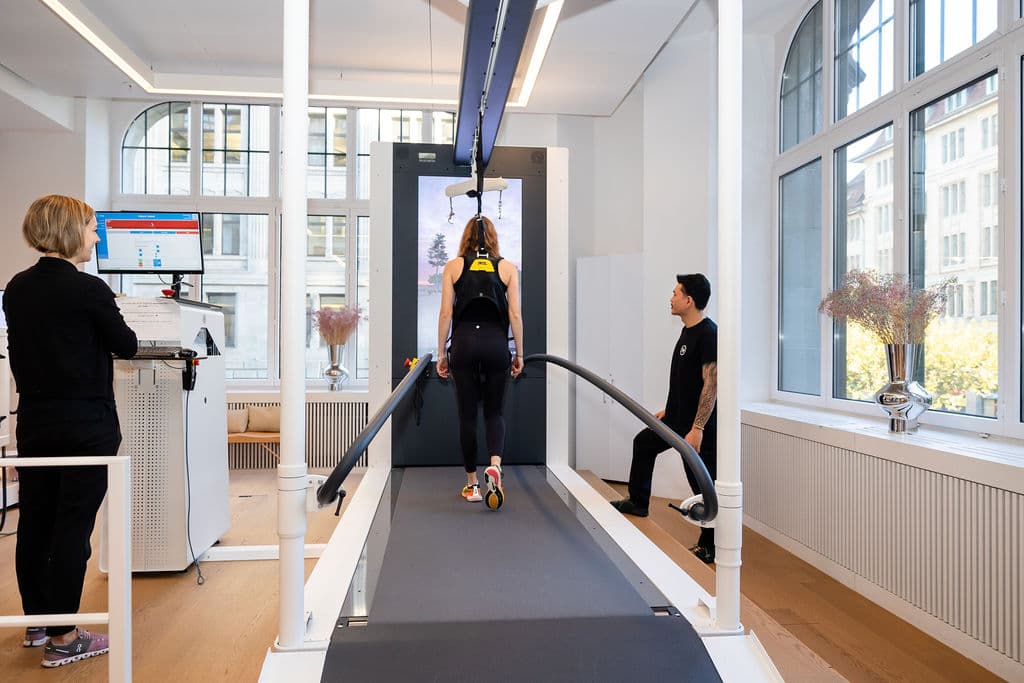
C-Mill®

Augmented Reality Treadmill

Real-world gait
View details →

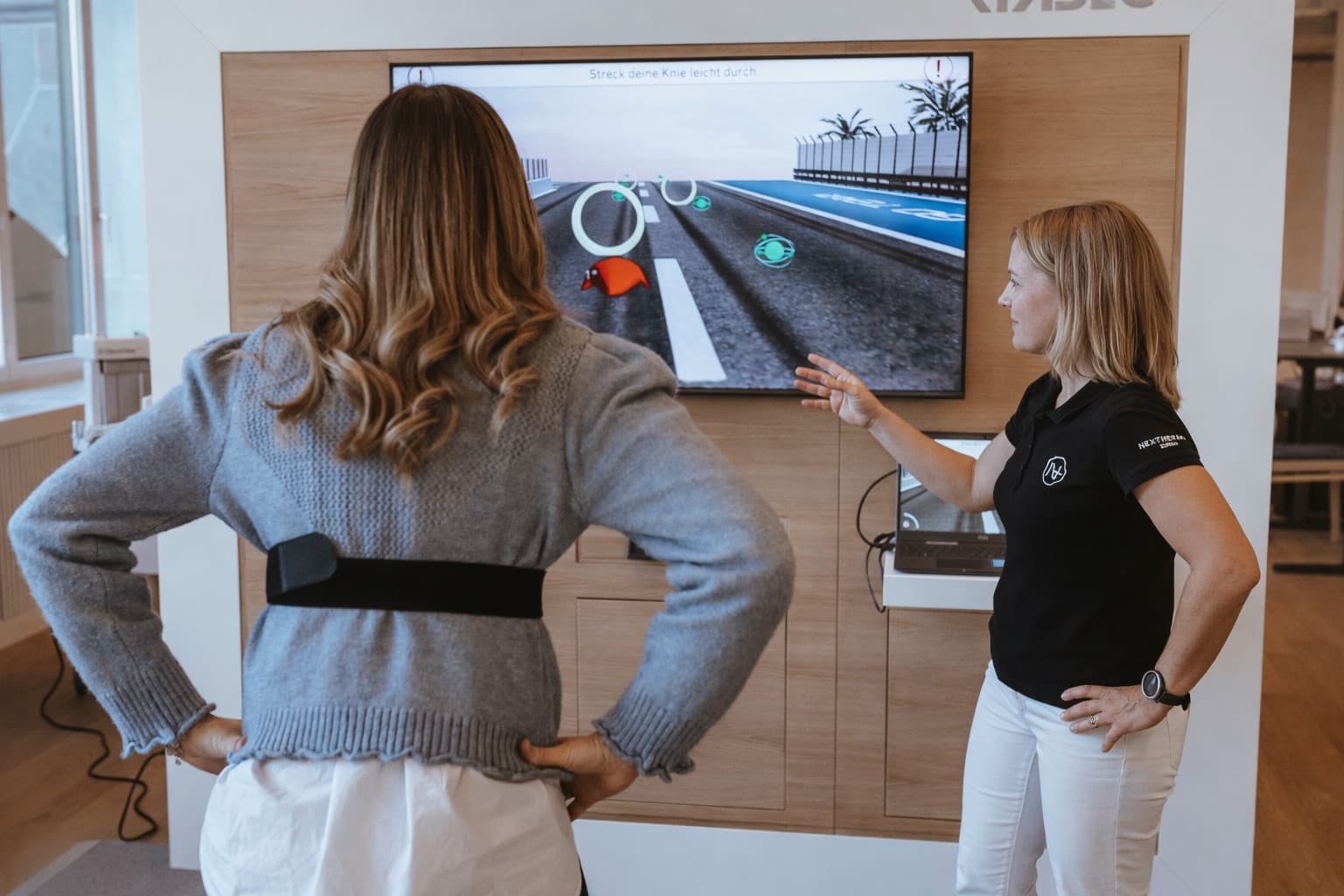
The C-Mill combines instrumented treadmill walking with augmented reality projections onto the belt surface, challenging patients to adapt their gait to real-world-like obstacles, stepping targets, and irregular terrains. It trains the higher-level gait skills, including obstacle avoidance, dual-task walking, and reactive balance, that conventional treadmill therapy cannot address.

Clinical Evidence

Clinically validated for gait adaptability, fall prevention, and community walking readiness across stroke, MS, and Parkinson's populations.

Key Benefits

AR projections simulate real-world walking challenges
Obstacle avoidance and stepping target training
Dual-task cognitive-motor training
Instrumented force plates measure gait symmetry
Safe environment with overhead harness support
Prepares patients for community-level independence

Conditions Treated

StrokeMultiple SclerosisParkinson'sSpinal Cord InjuryBrain InjuryCerebral Palsy
Riablo

Balance & Coordination

Riablo

Gamified Rehabilitation Platform

Engagement-led
View details →

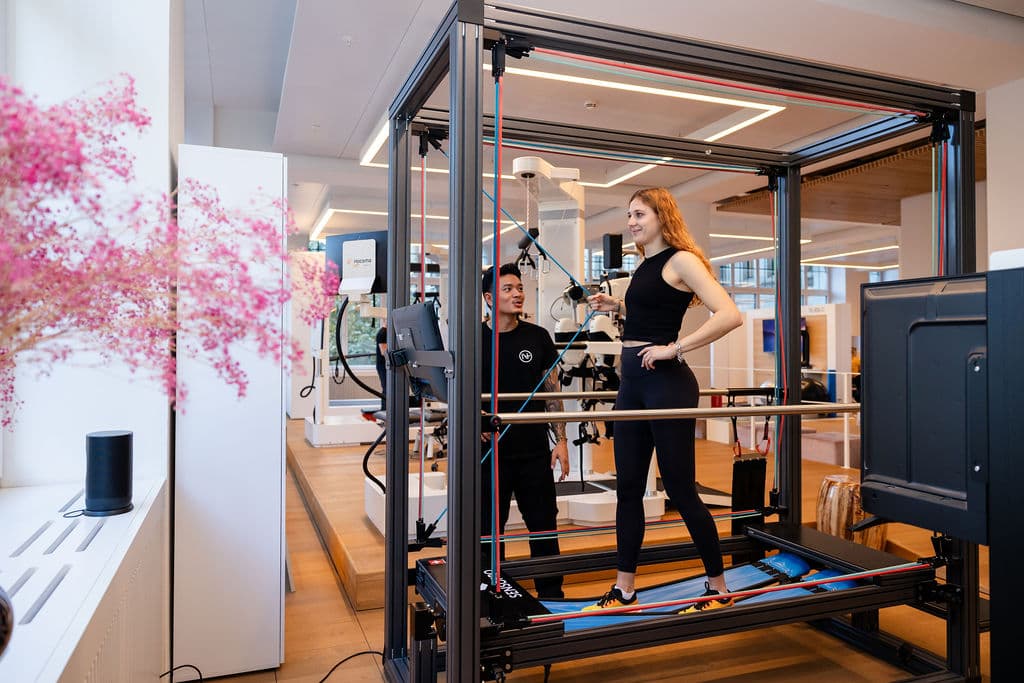
Riablo uses wireless motion-capture sensors to transform targeted therapeutic movements into engaging, interactive games. Patients perform precise exercises for trunk control, upper or lower limb function, while the system delivers real-time performance analytics and adaptive difficulty. The gamification element is clinically significant: it dramatically increases the number of repetitions patients complete while keeping effort and motivation high.

Clinical Evidence

Clinical evidence supports use in stroke, MS, Parkinson's, cerebral palsy, and paediatric neurological rehabilitation. Validated for both upper and lower limb function.

Key Benefits

Wireless sensors, no cumbersome wiring
Gamified tasks increase motivation and repetition count
Upper limb, trunk, and lower limb programmes
Real-time performance analytics for therapist and patient
Suitable for children and adults
Home exercise programme generation for continuity of care

Conditions Treated

StrokeCerebral PalsyMultiple SclerosisParkinson'sBrain Injury
SensoPro

Balance & Coordination

SensoPro

Sensorimotor Balance Training

Proprioception focus
View details →

SensoPro is a precision sensorimotor training system that challenges the nervous system's ability to integrate proprioceptive, vestibular, and visual inputs for balance control. Progressive instability platforms with real-time biofeedback target the specific deficits in balance and body awareness that are common across neurological conditions, deficits that conventional physiotherapy rarely addresses with sufficient intensity.

Clinical Evidence

Evidence-based approach rooted in sensorimotor neuroscience. Applied in neurological rehabilitation across stroke, MS, and Parkinson's populations.

Key Benefits

Targets proprioceptive and sensorimotor deficits directly
Progressive instability levels for measurable challenge
Real-time biofeedback optimises training quality
Reduces fall risk through improved postural awareness
Trains the brain-body connection, not just muscles
Suitable for adults and children

Conditions Treated

StrokeMultiple SclerosisParkinson'sBrain InjurySpinal Cord Injury
Rysen

Balance & Coordination

Rysen

Balance & Overground Gait System

Overground freedom
View details →

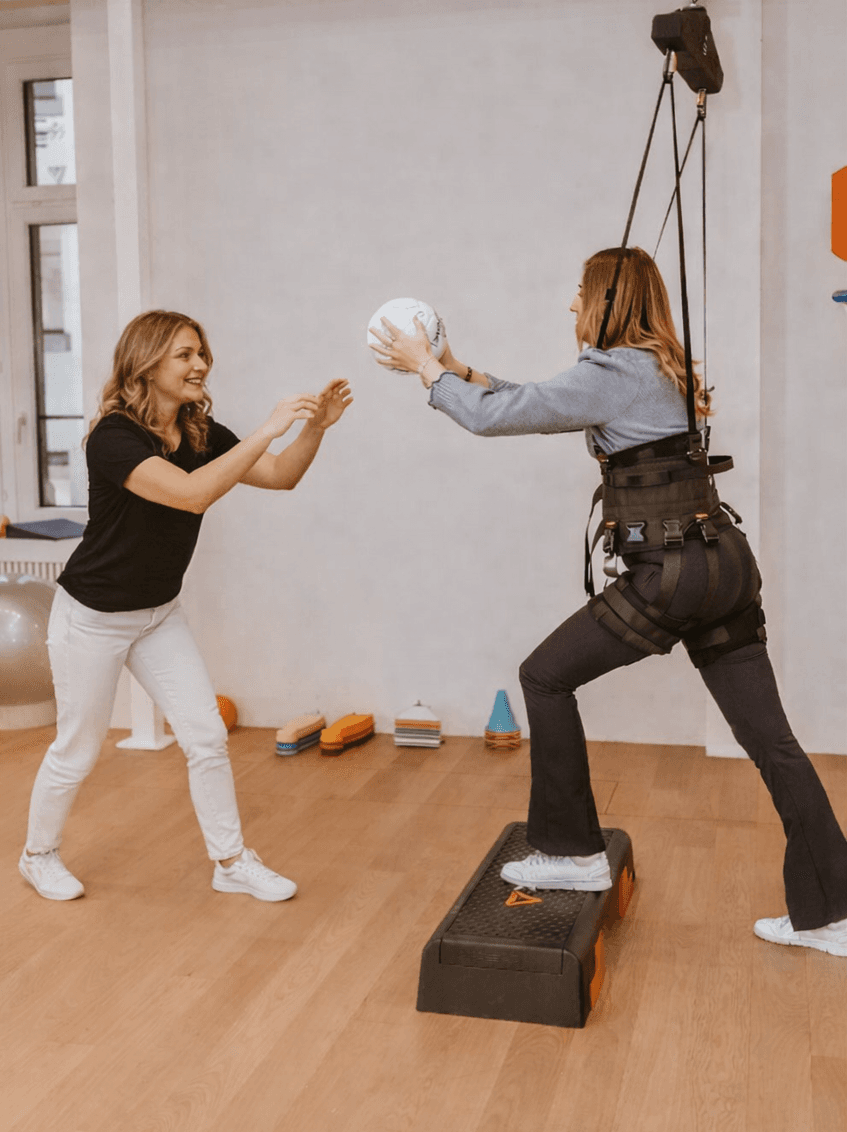
Rysen is an innovative dynamic body-weight support system that enables safe overground gait and balance training across a large therapy space. Unlike treadmill-based systems, Rysen allows patients to walk freely, turning corners, changing direction, navigating environments, with the system following overhead and preventing falls without restricting movement. This freedom unlocks a new category of real-world mobility training.

Clinical Evidence

Evidence supports use in early mobilisation, fall prevention, and overground gait rehabilitation across multiple neurological conditions.

Key Benefits

Safe overhead support throughout a large training space
True overground gait, not treadmill-constrained
Allows turning, direction changes, and task practice
Fall prevention without movement restriction
Combines with balance and dual-task training
Suitable for early-phase and advanced rehabilitation

Conditions Treated

StrokeMultiple SclerosisParkinson'sSpinal Cord InjuryBrain InjuryCerebral Palsy
Dessintey IVS3

Hands, Arms & Daily Living

Dessintey IVS3

Intensive Visual Simulation, Upper Limb

Visual neuroplasticity
View details →

The IVS3 (Intensive Visual Simulation) is a patented upper limb rehabilitation system developed by Dessintey that harnesses the power of intensive visual feedback to drive motor recovery. The device presents the patient with a high-intensity visual simulation of movement, exploiting the brain's mirror neuron system and the deep link between vision and motor control, to reactivate neural pathways and restore upper limb function. IVS3 is indicated for post-stroke upper limb paresis and Complex Regional Pain Syndrome (CRPS), delivering an evidence-based visual therapy that dramatically accelerates the path to autonomy.

Clinical Evidence

Clinically validated for post-stroke upper limb rehabilitation and Complex Regional Pain Syndrome (CRPS). Designed around the neuroscience of intensive visual feedback and mirror neuron activation as drivers of motor neuroplasticity.

Key Benefits

Intensive visual stimulation activates the mirror neuron system
Restores upper limb motor function following stroke
Effective for Complex Regional Pain Syndrome (CRPS)
Drives neuroplasticity through high-repetition visual-motor coupling
Accelerates return to independence in daily activities
Suitable for patients with significant residual upper limb paresis

Conditions Treated

StrokeBrain InjuryMultiple Sclerosis
Telko

Mobility & Gait

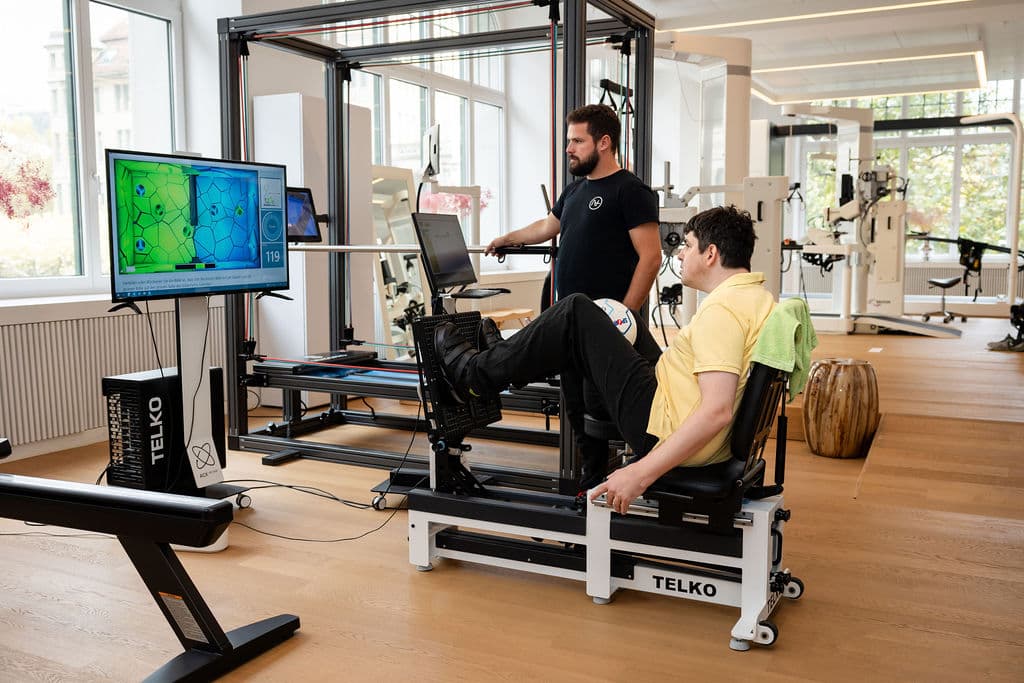
Telko

Robotic Leg Press & Lower Extremity Strength Training

Leg strength
View details →

The Telko is a robotic leg press system designed for intensive lower extremity strength and power training in neurological rehabilitation. It enables precise, high-repetition leg press movements with real-time force measurement and biofeedback, building the leg strength, endurance, and neuromuscular control that underpin safe standing, walking, and stair climbing. The system supports patients across all levels of lower limb function, from those with significant weakness to patients in the later stages of rehabilitation looking to maximise functional performance.

Clinical Evidence

Lower extremity strength training shown to improve gait speed, walking endurance, and functional independence across stroke, MS, and Parkinson's populations.

Key Benefits

Precise robotic leg press with real-time force measurement
High-repetition lower extremity strength training
Builds leg power for standing, walking, and stair climbing
Adjustable resistance and range for all levels of function
Objective strength data tracks progress session by session
Suitable for all neurological conditions affecting lower limb strength

Conditions Treated

StrokeMultiple SclerosisParkinson'sSpinal Cord InjuryBrain InjuryCerebral Palsy
LEXO®

Mobility & Gait

LEXO®

Lower Extremity Exoskeleton Training

Overground exoskeleton
View details →

LEXO is a wearable lower extremity exoskeleton designed for intensive overground gait rehabilitation. Unlike treadmill-based systems, LEXO allows patients to walk freely in any direction, on real surfaces, while the exoskeleton provides precisely calibrated joint support and guidance. This overground, real-world walking experience is a key step in the transition from supported rehabilitation to independent community mobility.

Clinical Evidence

Evidence supports exoskeleton-assisted gait training for spinal cord injury, stroke, and MS. Overground training shown to enhance transfer of gait improvements to real-world walking.

Key Benefits

Wearable exoskeleton for true overground walking
Freedom to walk in any direction on real surfaces
Precisely calibrated joint support and guidance
Bridges rehabilitation to real-world independence
Adjustable assistance for progressive training
Suitable for patients from early mobilisation to advanced recovery

Conditions Treated

Spinal Cord InjuryStrokeMultiple SclerosisBrain InjuryCerebral Palsy
Pablo®

Hands, Arms & Daily Living

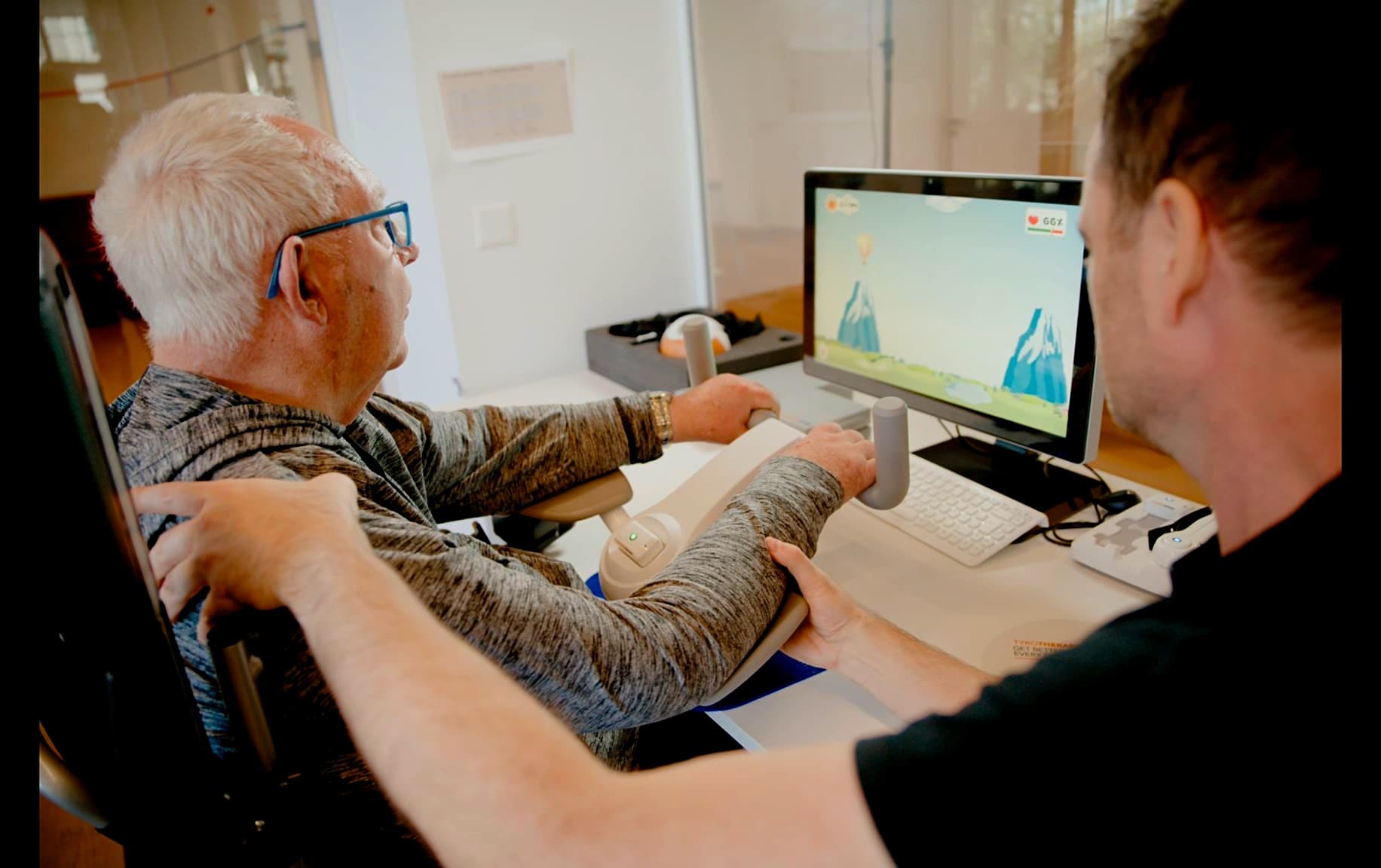
Pablo®

Upper Extremity Rehabilitation System

Upper extremity
View details →

Pablo is a versatile upper extremity rehabilitation system addressing the complete kinematic chain from fingers to shoulder. Using sensor-based assessment and training tools, Pablo enables precise, quantified training of grip strength, wrist mobility, forearm rotation, elbow function, and shoulder range of motion. The system generates detailed assessment reports that guide treatment planning and document functional progress.

Clinical Evidence

Evidence supports use across stroke, spinal cord injury, MS, and Parkinson's for upper extremity rehabilitation. Validated assessment protocols used in research settings.

Key Benefits

Complete upper extremity coverage: fingers to shoulder
Quantified grip strength and range-of-motion assessment
Gamified tasks for high-repetition practice
Detailed progress reports for therapists and patients
Suitable for all levels, from minimal function to refinement
Dual-hand training capability

Conditions Treated

StrokeMultiple SclerosisParkinson'sSpinal Cord InjuryBrain InjuryCerebral Palsy

See It In Action

Myro®

Hands, Arms & Daily Living

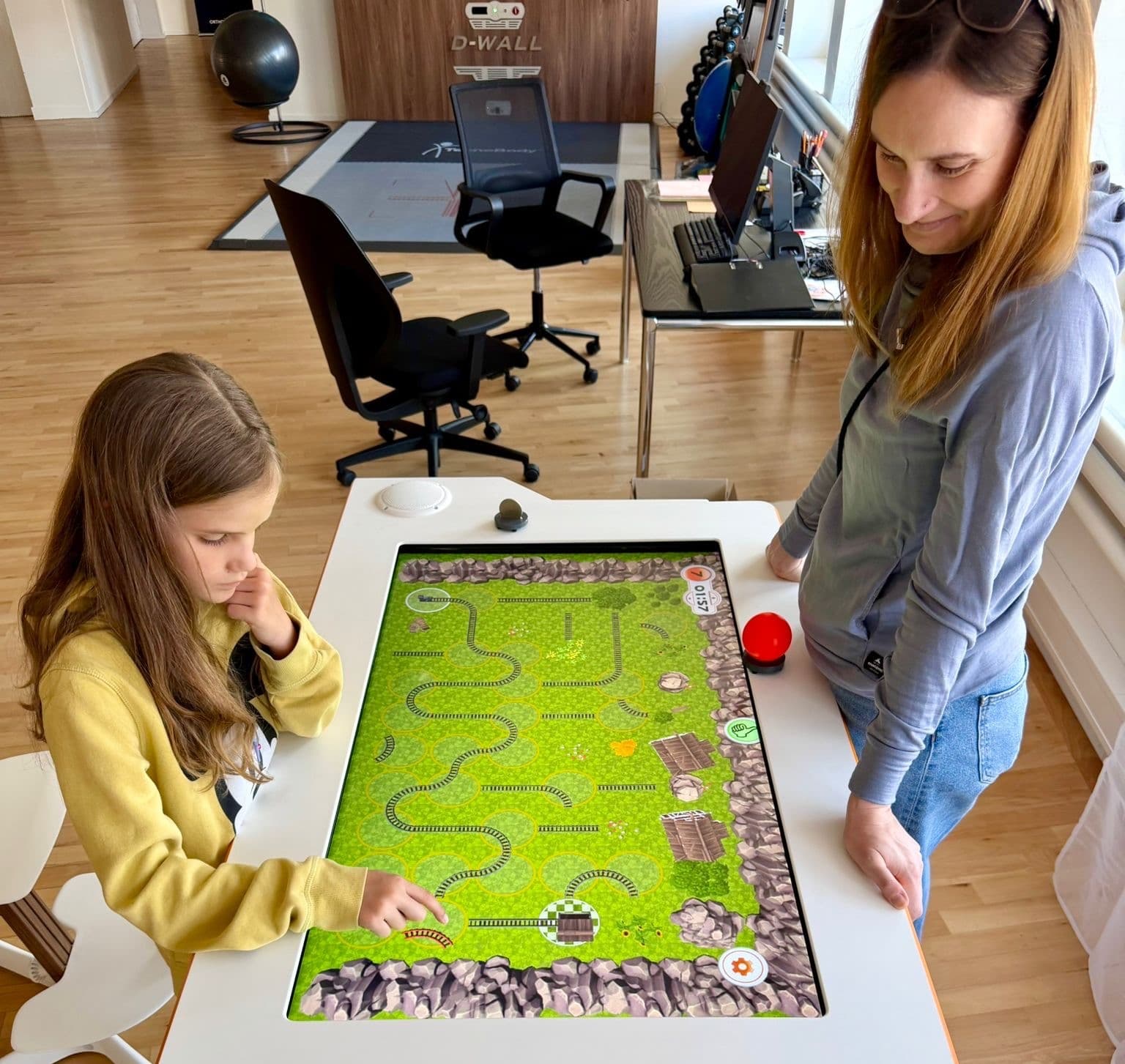
Myro®

Interactive Upper Limb & Cognitive Rehabilitation

Motor & cognitive
View details →

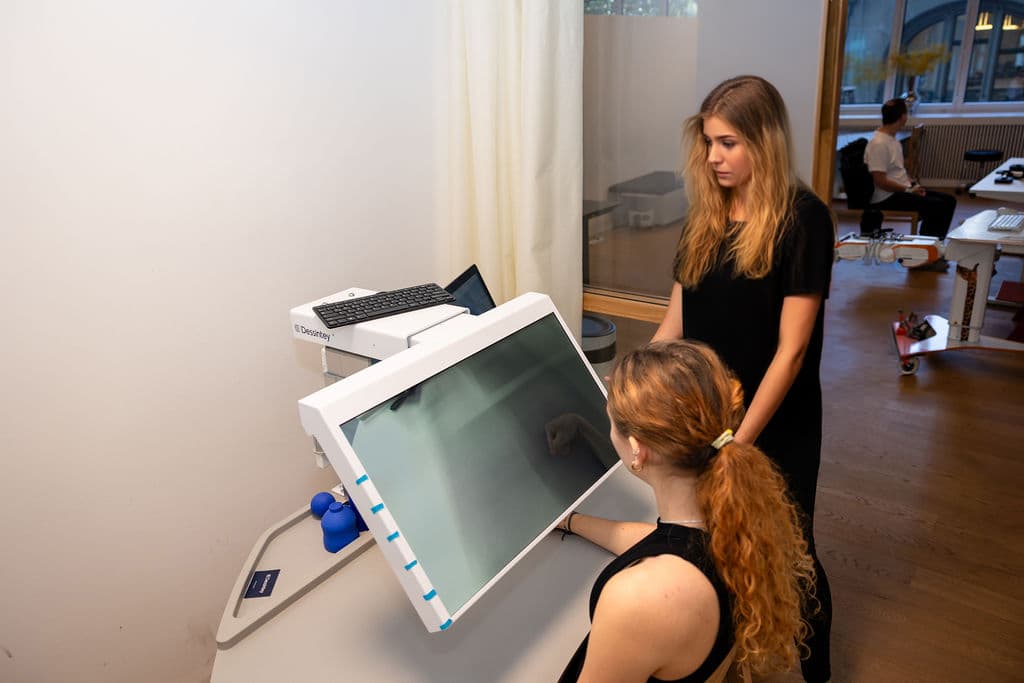
Myro is an interactive upper limb rehabilitation device featuring a sensor-based touchscreen surface that combines motor therapy and cognitive rehabilitation in one engaging system. Patients perform therapeutic tasks, real object manipulation, and goal-directed games that train upper extremity range of motion, force control, graphomotor skills, and activities of daily living — while simultaneously addressing attention, planning, and visual-spatial cognition. Myro is fully adjustable for use in standing, sitting, wheelchair, or bedside positions, and supports both unilateral and bilateral training for children and adults.

Clinical Evidence

Task-specific upper limb training with integrated cognitive demands shown to enhance neuroplastic recovery across stroke, brain injury, and paediatric neurological populations.

Key Benefits

Sensor-based touchscreen with integrated force detection
Combines motor and cognitive rehabilitation in every session
Uni- and bilateral arm training modes
Real object integration alongside game-based tasks
Adaptable for standing, sitting, wheelchair, and bedside use
Suitable for children and adults

Conditions Treated

StrokeBrain InjuryMultiple SclerosisSpinal Cord InjuryCerebral Palsy
Amadeo®

Hands, Arms & Daily Living

Amadeo®

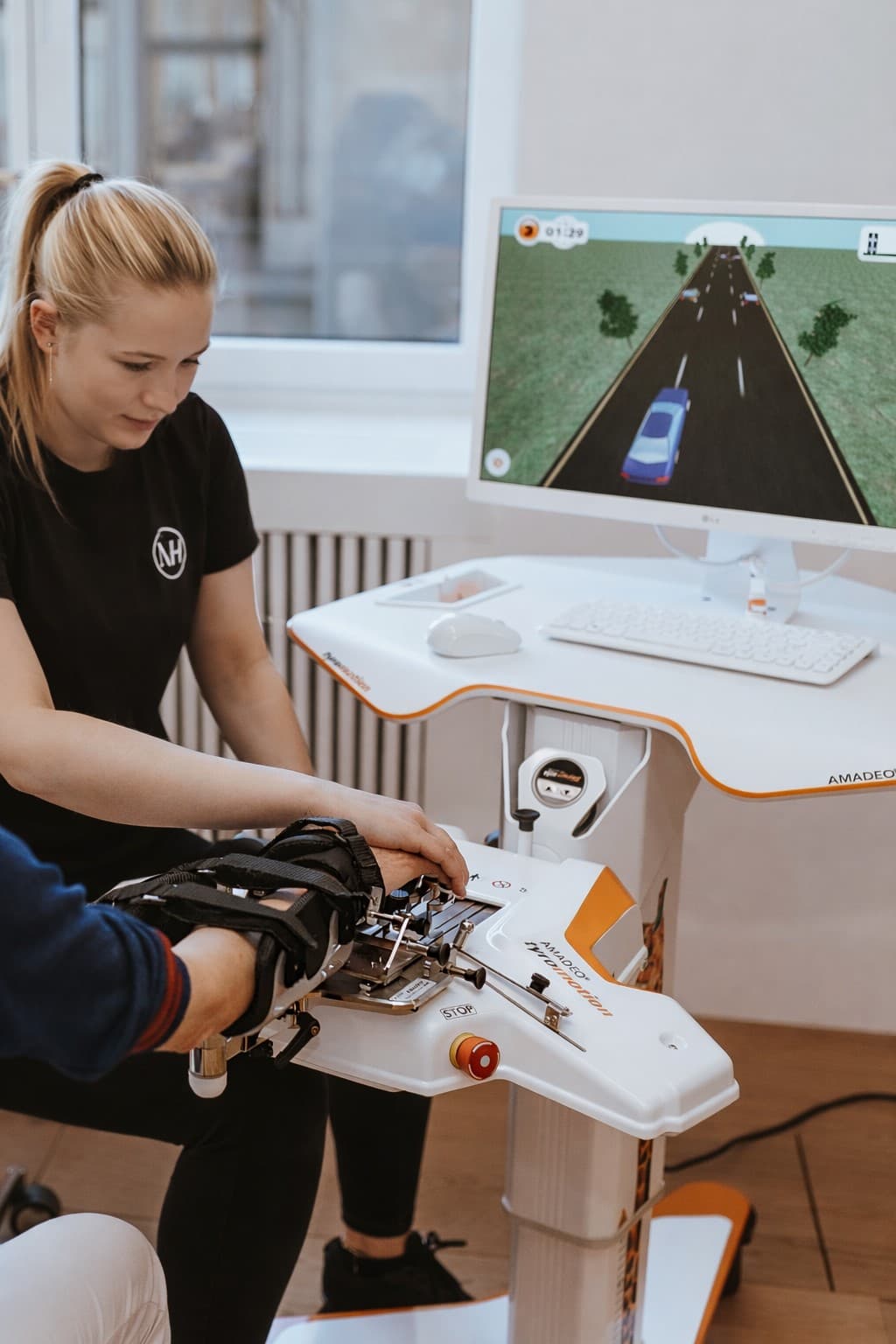
Robotic Finger & Hand Rehabilitation

Hand specialist
View details →

Amadeo is the world's first robotics-based device for the training and assessment of all five fingers simultaneously. It enables patients to work on finger extension and flexion, movements that are often the most profoundly affected after stroke or brain injury, and the most critical for hand function in daily life. The system provides passive, assisted, and active training modes, meeting patients wherever they are in their recovery.

Clinical Evidence

Clinically validated for hand rehabilitation following stroke, spinal cord injury, and acquired brain injury. Shown to improve finger force, range of motion, and dexterity.

Key Benefits

Trains all five fingers simultaneously
Passive, assisted, and active training modes
Real-time force and movement biofeedback
Gamified training tasks maintain engagement
Finger-specific assessment for precise programme design
Effective even in patients with near-total hand paralysis

Conditions Treated

StrokeSpinal Cord InjuryBrain InjuryMultiple SclerosisCerebral Palsy

See It In Action

Diego®

Hands, Arms & Daily Living

Diego®

Robotic Arm & Shoulder Rehabilitation

Shoulder & arm

View details →

Diego is a robotic rehabilitation device for arm and shoulder therapy that operates across a full three-dimensional therapeutic space. Its intelligent weight relief system supports natural movement, enabling patients with moderate to severe arm weakness to perform active, task-oriented training at their individual capacity level. Diego supports unilateral and bilateral therapy modes, integrates immersive virtual reality, and allows patients to practise everyday activities both with and without screen assistance.

Clinical Evidence

Clinical guidelines recommend robotic therapy for patients with moderate to severe arm weakness. VR integration shown to increase motivation and commitment to intensive therapy (Viñas-Diz et al., 2016).

Key Benefits

Intelligent weight relief enables active reach in weak or paralysed limbs
Full three-dimensional therapeutic workspace
Unilateral and bilateral training modes
Immersive virtual reality for enhanced motivation
Objective performance assessment built in
Suitable for children and adults

Conditions Treated

StrokeBrain InjuryMultiple SclerosisSpinal Cord InjuryCerebral Palsy
OMEGO®

Mobility & Gait

OMEGO®

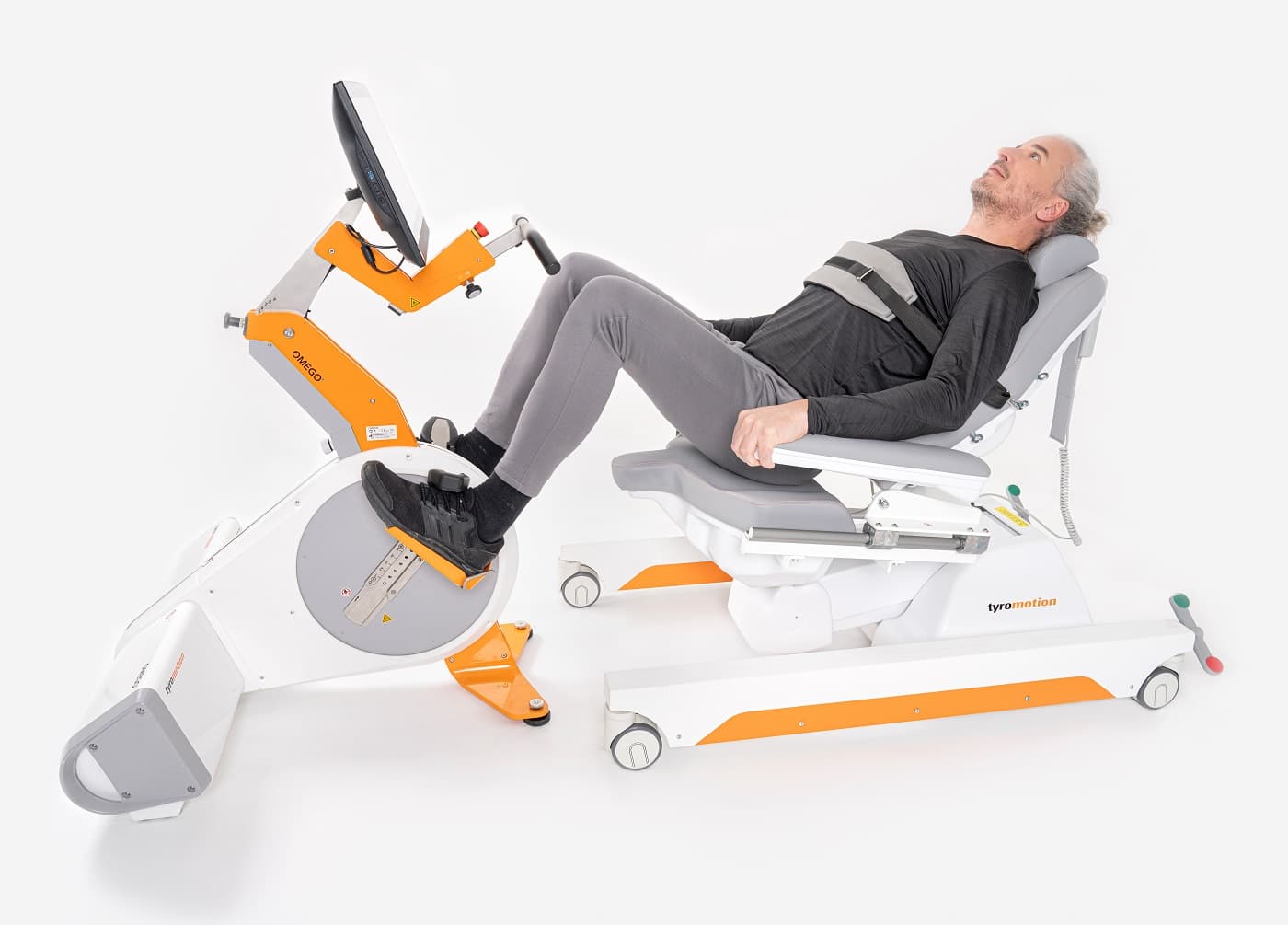
Lower Extremity Cycling Rehabilitation

Early mobilisation
View details →

OMEGO is a motor-assisted cycling system for lower extremity rehabilitation, enabling continuous passive, assisted, and active leg movement even in patients with complete paralysis. The cyclical movement pattern drives neuroplasticity through repeated, high-volume motor activation, while simultaneously improving circulation, reducing spasticity, and building cardiovascular fitness. OMEGO is suitable from the earliest stages of rehabilitation.

Clinical Evidence

Motor-assisted cycling shown to reduce spasticity, improve muscle activation, and support neuroplastic recovery across spinal cord injury, stroke, and MS populations.

Key Benefits

Motor-assisted for patients with complete or partial paralysis
Passive, assisted, and active cycling modes
High-volume repetitive movement drives neuroplasticity
Reduces spasticity and improves muscle tone
Cardiovascular conditioning during neurological rehab
Suitable from day one of rehabilitation

Conditions Treated

Spinal Cord InjuryStrokeMultiple SclerosisCerebral Palsy
TYMO®

Balance & Coordination

TYMO®

Balance & Posture Training Platform

Balance platform
View details →

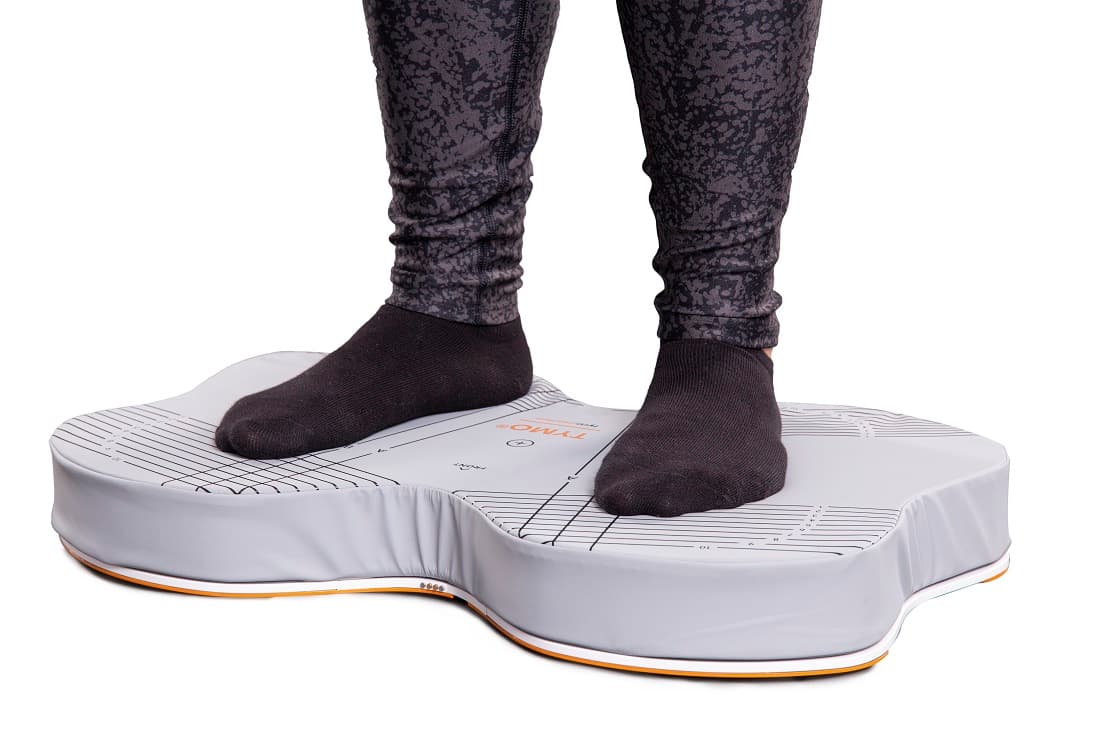
TYMO is a pressure-sensitive balance platform that measures centre-of-pressure shifts in real time and delivers interactive, gamified balance training through a tablet display. Patients receive immediate visual feedback on their weight distribution and postural control, enabling the kind of high-repetition, task-oriented balance practice that builds the automatic postural reactions needed for safe, confident standing and walking.

Clinical Evidence

Balance platform training validated for fall prevention, postural control, and weight-bearing symmetry across stroke, MS, and Parkinson's populations.

Key Benefits

Real-time centre-of-pressure measurement and feedback
Gamified balance tasks for high engagement
Weight-bearing symmetry training after stroke or injury
Static and dynamic balance assessment built in
Progressive difficulty levels
Suitable for children and adults

Conditions Treated

StrokeMultiple SclerosisParkinson'sBrain InjuryCerebral Palsy
RehaCom

Cognitive Training

RehaCom

Computer-Assisted Cognitive Rehabilitation

Cognitive specialist

View details →

RehaCom is the world's most comprehensive computer-assisted cognitive rehabilitation system, used in rehabilitation centres across more than 40 countries. With approximately 30 specialised training modules available in 27 languages, RehaCom delivers deficit-specific, individually tailored cognitive therapy for patients at every stage of neurological rehabilitation. Its auto-adaptive difficulty system continuously adjusts task challenge based on patient performance, ensuring every session is optimally demanding, measurable, and motivating.

Clinical Evidence

World's leading computer-assisted cognitive rehabilitation system. Extensive clinical evidence across attention, memory, processing speed, and executive function rehabilitation following stroke, ABI, and MS.

Key Benefits

~30 specialised cognitive training modules
Auto-adaptive difficulty, adjusts to every patient in real time
Covers attention, concentration, memory, and perception
Available in 27 languages for international patients
Remote home training option for continuity between sessions
Detailed progress reports for therapists and patients

Conditions Treated

StrokeBrain InjuryMultiple SclerosisParkinson'sSpinal Cord InjuryCerebral Palsy
D-Wall Elite

Balance & Coordination

D-Wall Elite

Digital Smart Mirror & Movement Analysis System

Interactive wall

View details →

D-Wall Elite is a large-format interactive rehabilitation wall that projects functional training tasks onto a screen surface, requiring patients to reach, step, and react to dynamic visual stimuli. It delivers high-intensity, task-oriented training for upper limb reach, balance, coordination, and reaction time, simultaneously challenging motor and cognitive systems in an engaging, goal-directed format.

Clinical Evidence

Interactive wall therapy validated for upper limb rehabilitation, balance training, and cognitive-motor dual-task practice across neurological populations.

Key Benefits

Large interactive surface for full-body task training
Reaching, stepping, and reaction-time tasks
Simultaneous motor and cognitive training
Progressively challenging programmes
Motivating, visual goal-directed format
Suitable for individual and group rehabilitation

Conditions Treated

StrokeBrain InjuryMultiple SclerosisParkinson'sCerebral Palsy
TyroStation

Hands, Arms & Daily Living

TyroStation

Integrated Upper Extremity Workstation

Integrated system
View details →

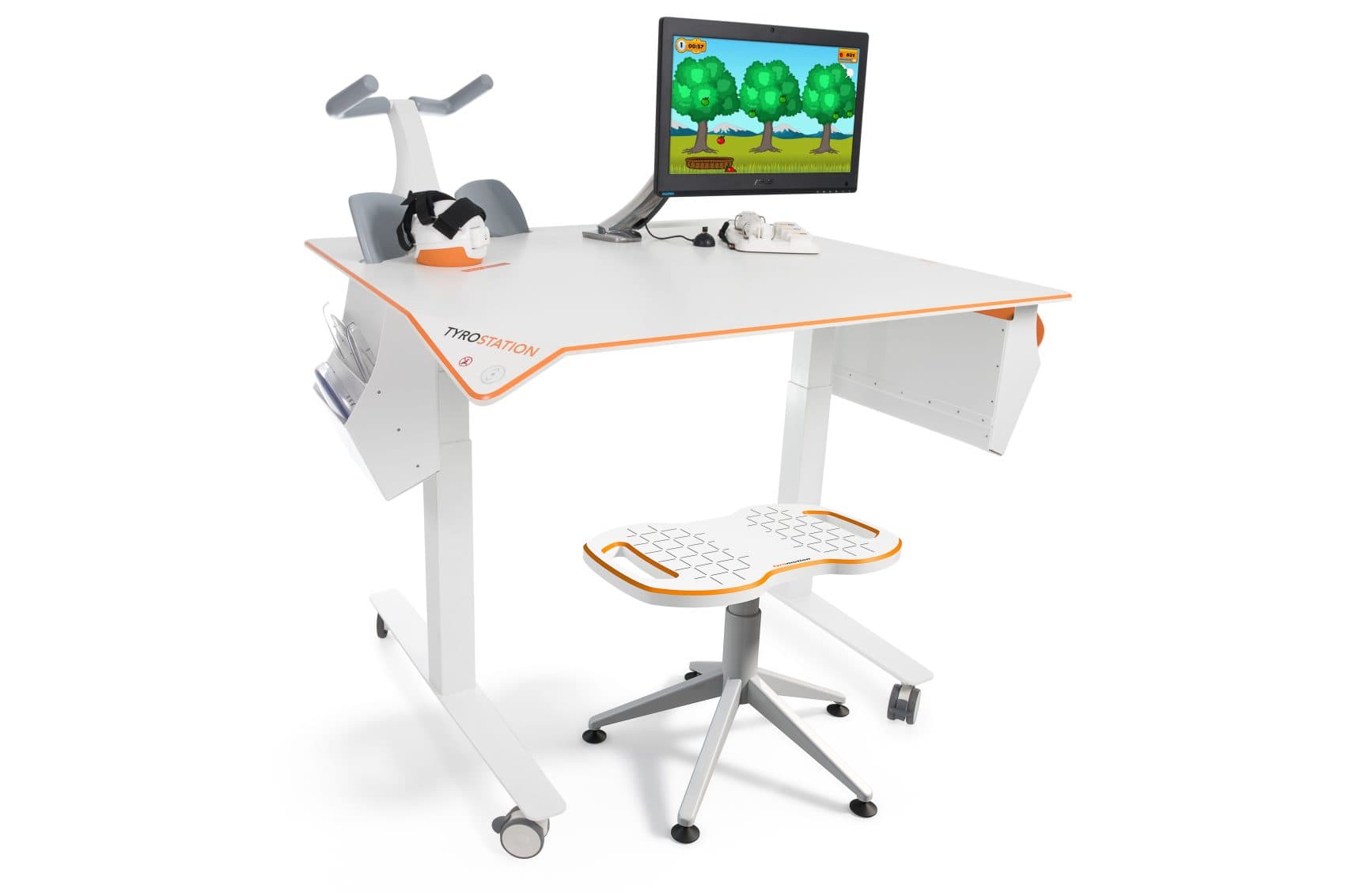
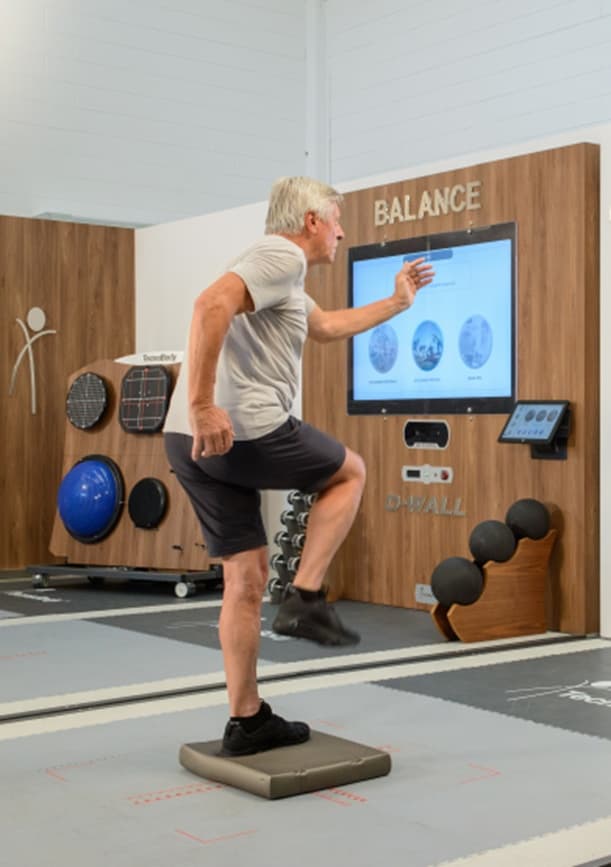
TyroStation is an integrated upper extremity rehabilitation workstation that brings together the Tyromotion device ecosystem, enabling therapists to run a seamless upper limb session across assessment, robotic training, and functional task practice without switching setups. It creates an efficient, patient-centred therapy environment that maximises the productive training time in every session.

Clinical Evidence

Integrates clinically validated Tyromotion rehabilitation devices for comprehensive upper extremity rehabilitation programmes.

Key Benefits

Integrated setup for seamless upper limb rehabilitation
Combines multiple Tyromotion devices in one workstation
Reduces setup time, maximises patient training time
Full upper limb coverage from fingers to shoulder
Assessment and training in a single, connected workflow
Suitable for outpatient and intensive programmes

Conditions Treated

StrokeBrain InjurySpinal Cord InjuryMultiple SclerosisCerebral Palsy
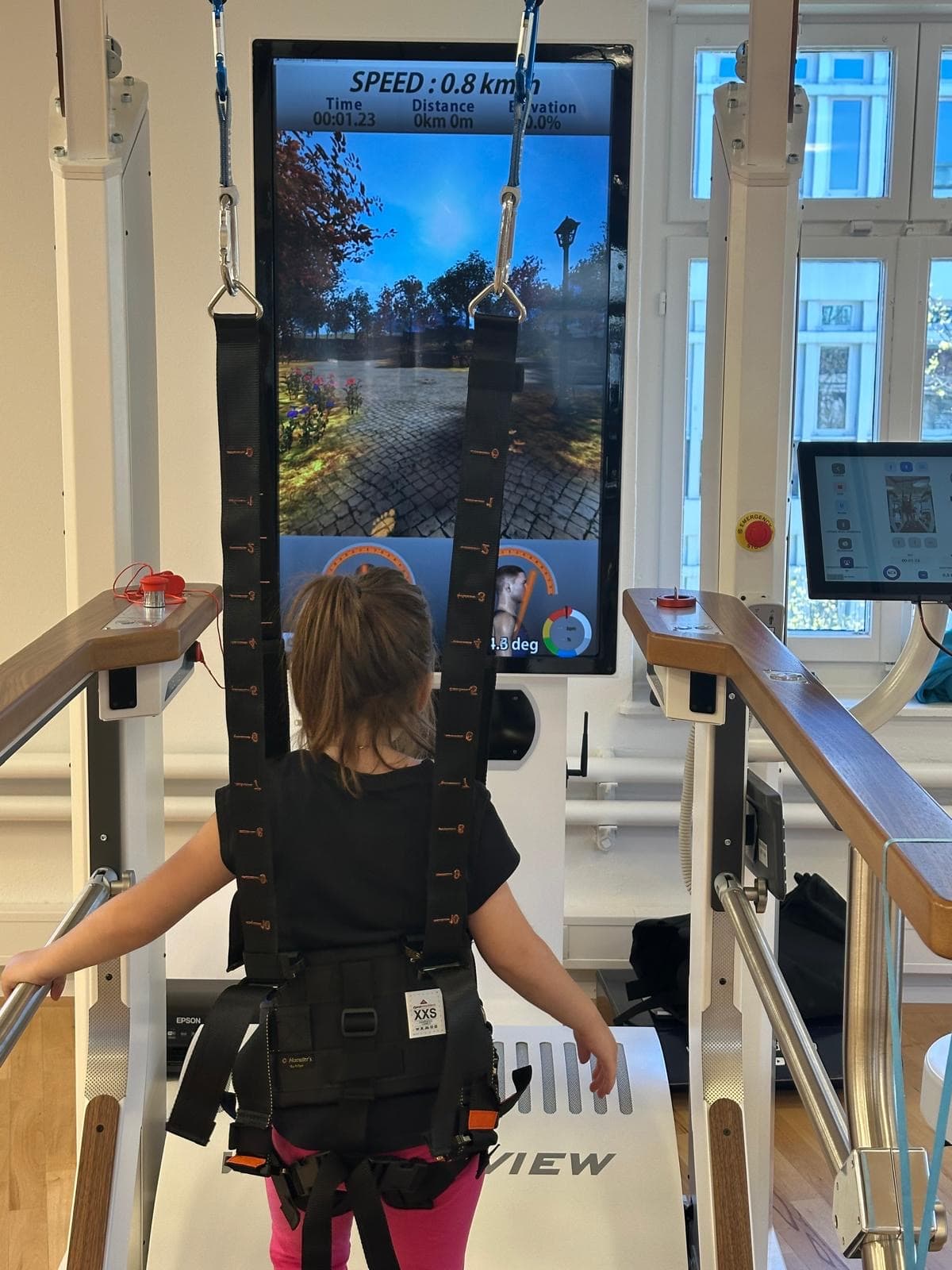
Walker View

Mobility & Gait

Walker View

Self-Adaptive Treadmill & Motion Capture Lab

Gait analysis
View details →

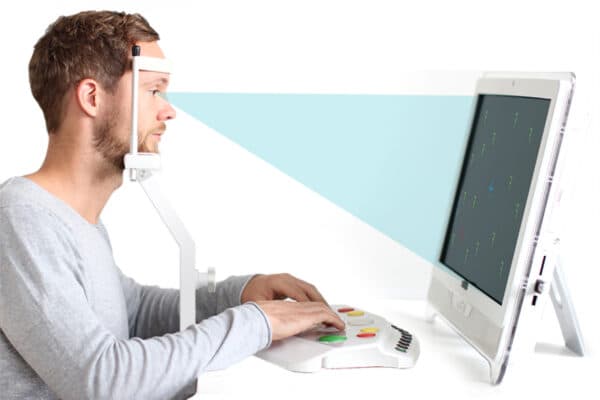
Walker View combines an instrumented treadmill with real-time gait analysis, capturing spatiotemporal gait parameters, including step length, cadence, symmetry, and ground reaction forces, on every step. This data-driven approach allows therapists to identify specific gait deviations, design targeted interventions, and track functional walking improvements with clinical precision throughout the rehabilitation programme.

Clinical Evidence

Instrumented gait analysis recognised as a gold standard for objective assessment of walking function in neurological rehabilitation.

Key Benefits

Real-time spatiotemporal gait parameter analysis
Step symmetry, cadence, and step-length measurement
Ground reaction force data for detailed gait assessment
Identifies specific gait deviations to target in therapy
Tracks walking improvement with objective data over time
Combined training and assessment in a single system

Conditions Treated

StrokeMultiple SclerosisParkinson'sSpinal Cord InjuryBrain InjuryCerebral Palsy

As a former researcher and then technology developer in the field of neurorehabilitation, I know how important intensive functional training is for the patient. Only if they train on a regular basis, with high intensity and in a holistic fashion, can they get the maximum of functional recovery back after a neurologic injury. Nextherapy provides the environment, the technology and also the skilled therapists to achieve exactly this.

Dr. Gery Colombo

Founder of Hocoma · Rehab Technology Expert Former Research Engineer, Balgrist University Hospital (Zurich)

The science

Why Intensity Drives Recovery

Recovery is driven by high-dose, task-specific repetition.

Conventional therapy50–150 steps / session
Robotic-assisted therapyThousands of precise, symmetrical steps

Higher intensity → stronger neural signal → greater potential for functional recovery

4,000+Movements per session
80×More than conventional therapy
20+Robotic technologies
100%Covered by Swiss insurance

Clinical Principles

Six principles that guide everything we do

01

Intensity above all else

Neuroplasticity is dose-dependent. Our robotic systems deliver 4,000+ movements per session — up to 80× more than conventional physiotherapy.

02

Specificity of training

Effective neurorehabilitation must be task-specific. We train the exact movements and functions the patient needs to recover, in the precise way the nervous system learns.

03

Early intervention

Neuroplasticity is greatest in the first weeks and months post-event. We work to begin intensive rehabilitation as early as clinically possible.

04

Measurable goals

We set clear, patient-centred goals and measure progress against standardised clinical outcomes, shared with patients, families, and referring clinicians.

05

Technology in service of therapy

Our robotic systems extend what skilled therapists can achieve — they do not replace them. Every session is designed and supervised by a specialist.

06

The whole person

Neurological injury affects every dimension of life. We address physical function, cognition, emotional wellbeing, and social participation.

Get started

All technology. No extra charge.

Every system is fully covered by Swiss health insurance (KVG, IV, UVG & MV).

Start with an assessment →