Children and babies
Therapy for babies, children and adolescents.
We support children with neurological conditions and developmental delay from their first weeks of life into their teenage years. The youngest are treated hands-on, through play and together with their parents. Once a child is big enough, our paediatric systems add to the therapy where they help.
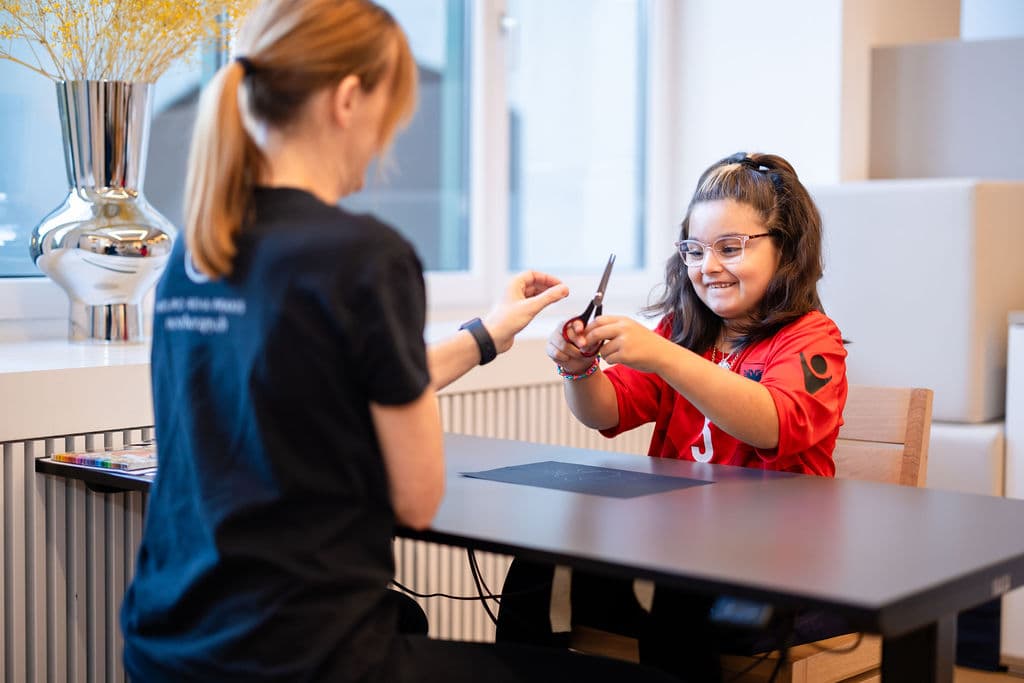
Who we treat
Conditions in childhood
Cerebral palsy
From early support in babyhood to intensive gait training at school age.
More on cerebral palsy →Spina bifida
We build strength, trunk control and mobility and support the provision of orthoses and assistive devices.
Genetic syndromes
For example Down syndrome or rare genetic conditions. We support motor development step by step, at your child’s pace.
Premature birth and its effects
Children born prematurely often develop differently. We follow their development closely and step in early where needed.
Developmental delay
If a child sits, crawls or walks later than expected, we assess why and provide targeted support.
Autism spectrum disorder (ASD)
We support sensory processing, motor skills and independence with sensory integration and structured approaches such as TEACCH, tailored to your child’s needs.
Acquired brain injury
After an accident, an infection or a lack of oxygen, we help children back into daily life, kindergarten and school.
More on brain injury →
Babies and toddlers
From the first weeks and months.
We can start working with babies just a few weeks after birth. Robotics is not used at this age. Our paediatric team works hands-on, follows development closely and shows you how to support your child in everyday life.
- Monitoring and supporting motor development
- Baby handling: carrying, positioning and playing in daily life
- Guidance and advice for parents
- Treatment based on Bobath (EBTA) and DMI
- Support after premature birth and for plagiocephaly
Therapy without robotics
Much of our therapy needs no devices.
Robotics is one tool among many. Children who are still very young or less affected often train without any devices at all. For cerebral palsy, for example, that looks like this:
Bobath for children
The therapist guides movement by hand and builds posture, balance and control through play.
DMI (Dynamic Movement Intervention)
Targeted positions trigger active, automatic reactions and build strength and motor milestones.
Therasuit and Spidercage
Intensive strength and balance training with an elastic suit and a frame with cords.
Sensory integration
Play-based therapy that helps children process touch, movement and body awareness.
Everyday skills
Dressing, eating, writing or playing: we practise what your child needs in daily life.
Eating, speech and communication
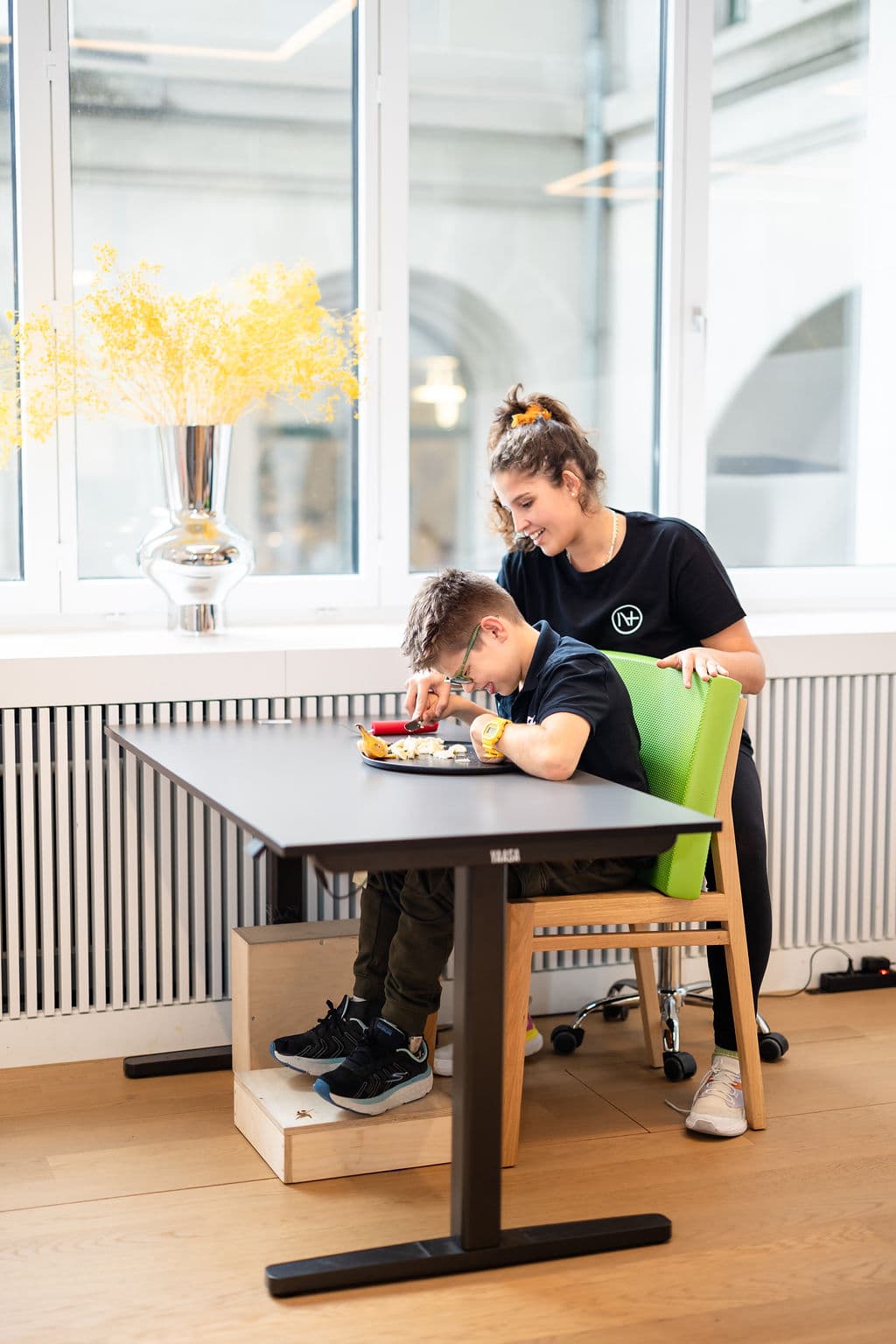
Orofacial therapy helps with eating, swallowing and speaking. Augmentative communication opens other ways to express themselves.
Robotics for children
Robotics, once your child is ready.
Once your child is big enough, our robotic and therapy systems add to the hands-on work. They make a very high number of repetitions possible and turn training into play. These are the systems we use most often with children:
Zürich
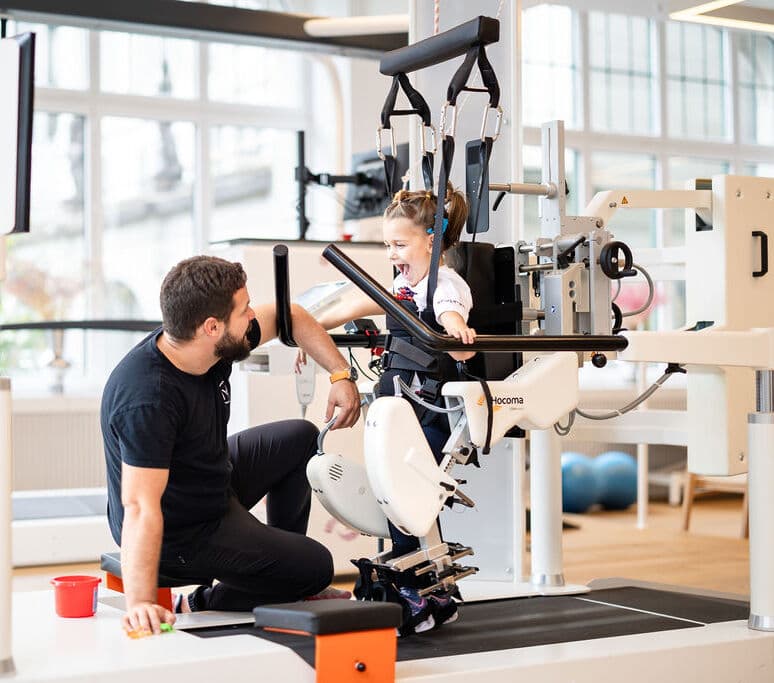
Lokomat® Pro with paediatric orthoses
Robotic gait training on a treadmill, adapted to smaller bodies and paired with virtual reality games. What counts is body size; most children are ready from around 2½ years.
Zürich
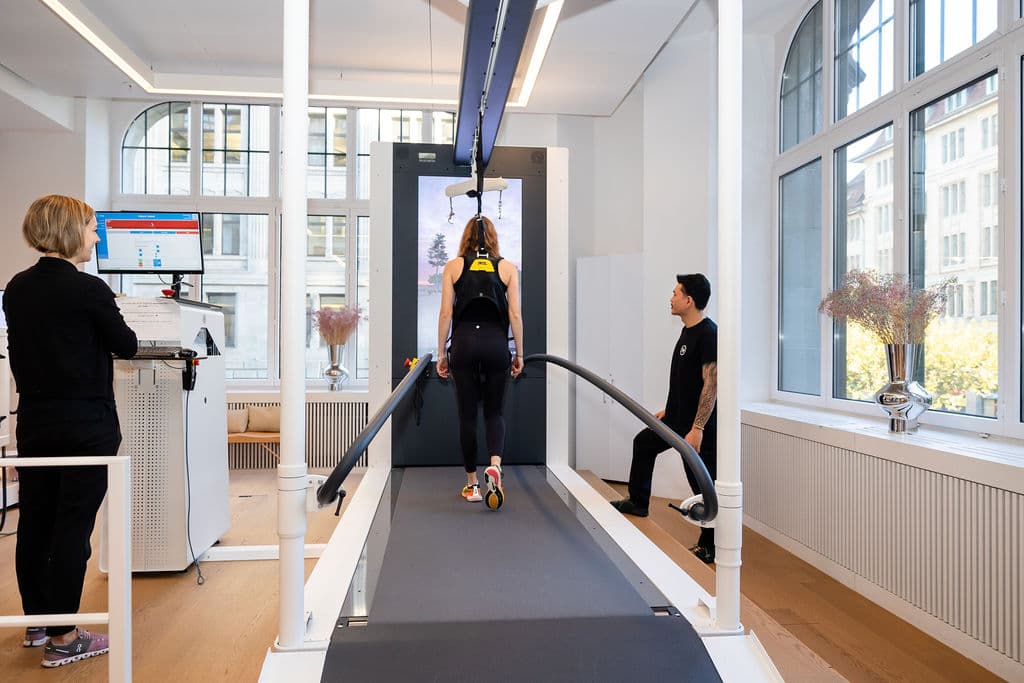
C-Mill®
A treadmill with projections on the walking surface. Your child steps onto targets and around obstacles, practising safe everyday walking step by step.
Zürich
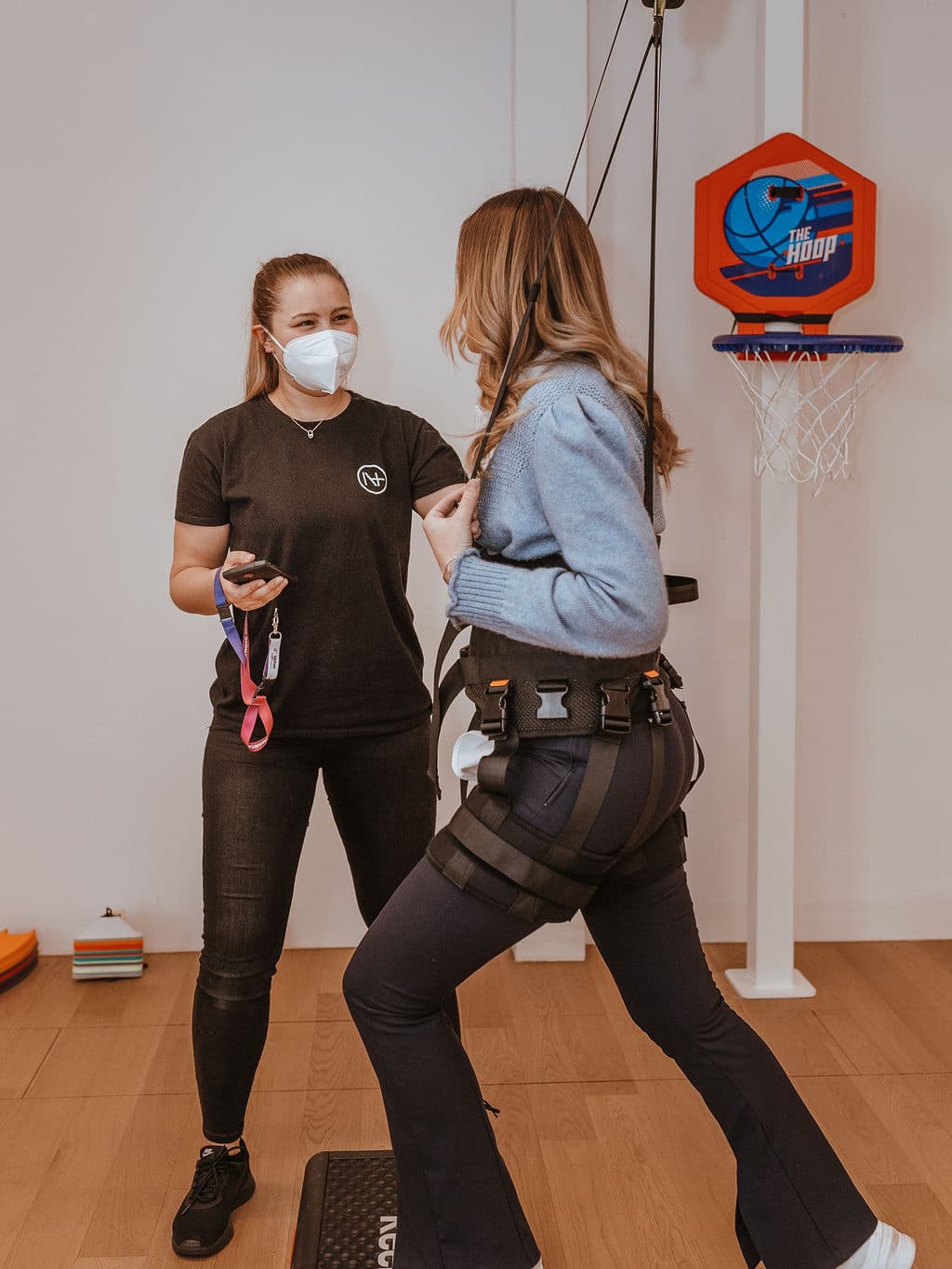
Rysen
A ceiling harness system catches your child safely, so they can walk, jump, run and even play basketball without fear of falling.
St. Gallen
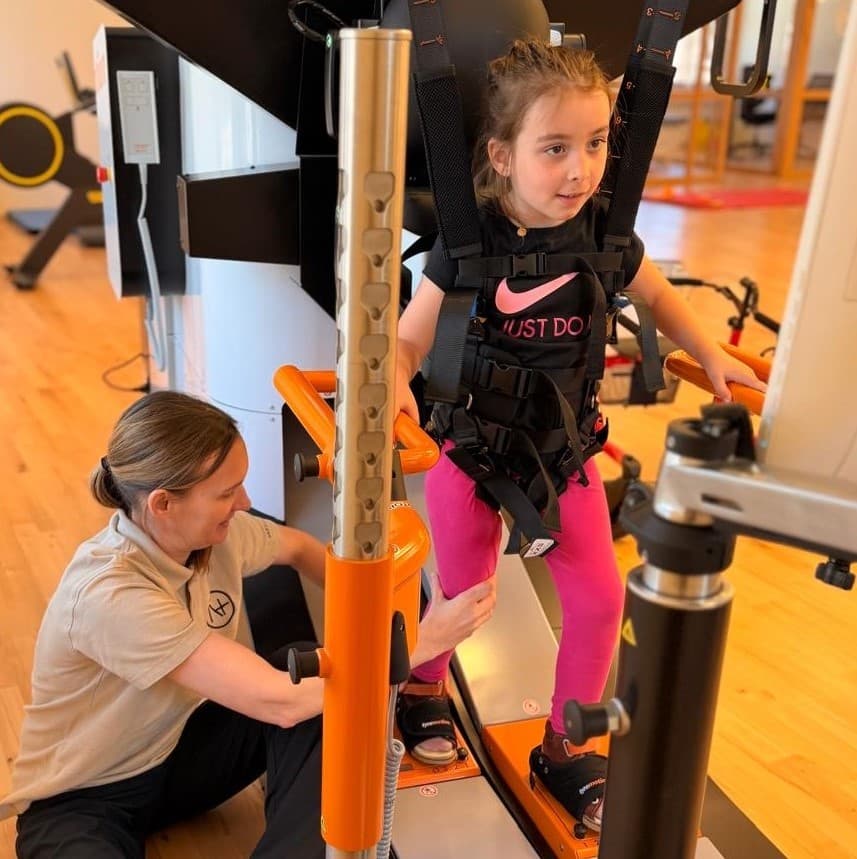
LEXO®
Robotic gait training that guides the feet on footplates. It allows a very high number of precise steps per session, including for children who cannot yet walk on their own.
St. Gallen
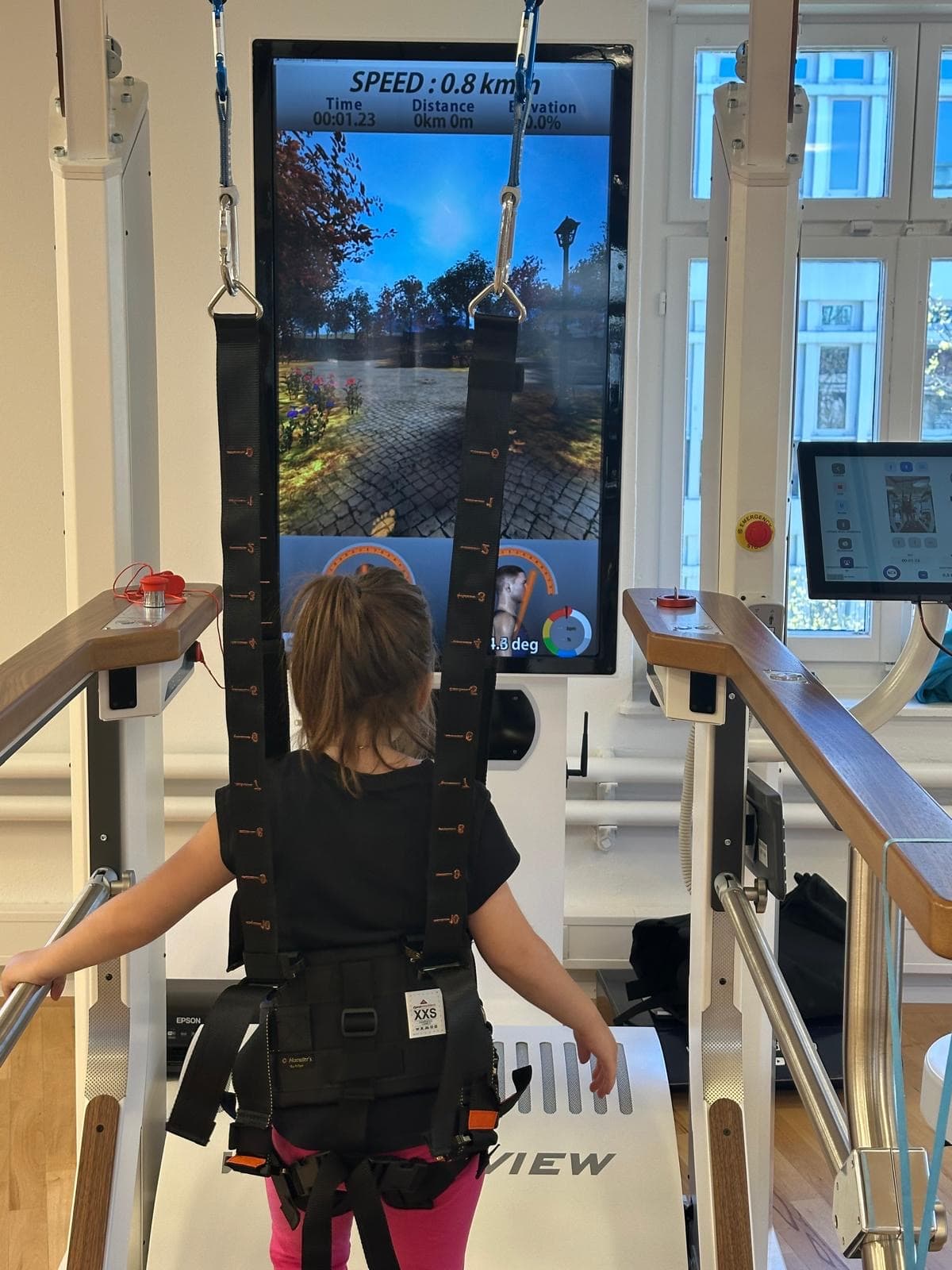
Walker View
A treadmill with real-time gait analysis and interactive games on screen. With every step, your child sees what they can already do.
More systems for arms, hands and balance
D-Wall Elite · St. Gallen
A large interactive wall with games. Your child reaches, steps and reacts to what happens on screen, training balance, arms and concentration at the same time.
Amadeo® · Zürich and St. Gallen
A hand robot that moves and trains each of the five fingers individually, through games on screen.
Pablo® · Zürich and St. Gallen
Sensor handles and motion sensors turn gripping, holding and arm movements into interactive games.
Myro® · St. Gallen
An interactive touchscreen table where your child practises arm and hand use and concentration with real objects and games.
TyroStation · St. Gallen
An arm and hand workstation that links several devices, from assessment to training.
For families
We support the whole family.
Parents involved
You take part in sessions, learn exercises for home and set the goals together with us.
Long-term support
We work with many children over several years. Therapy grows with your child and their goals.
Intensive phases in the school holidays
Bootcamps of one to four weeks can be scheduled during the school holidays.
Costs and paperwork
Therapy is usually covered by IV or health insurance. We take care of the cost approval.
Our paediatric team
Specialists in children.
Physiotherapists and occupational therapists with many years of experience in the rehabilitation of babies, children and adolescents.
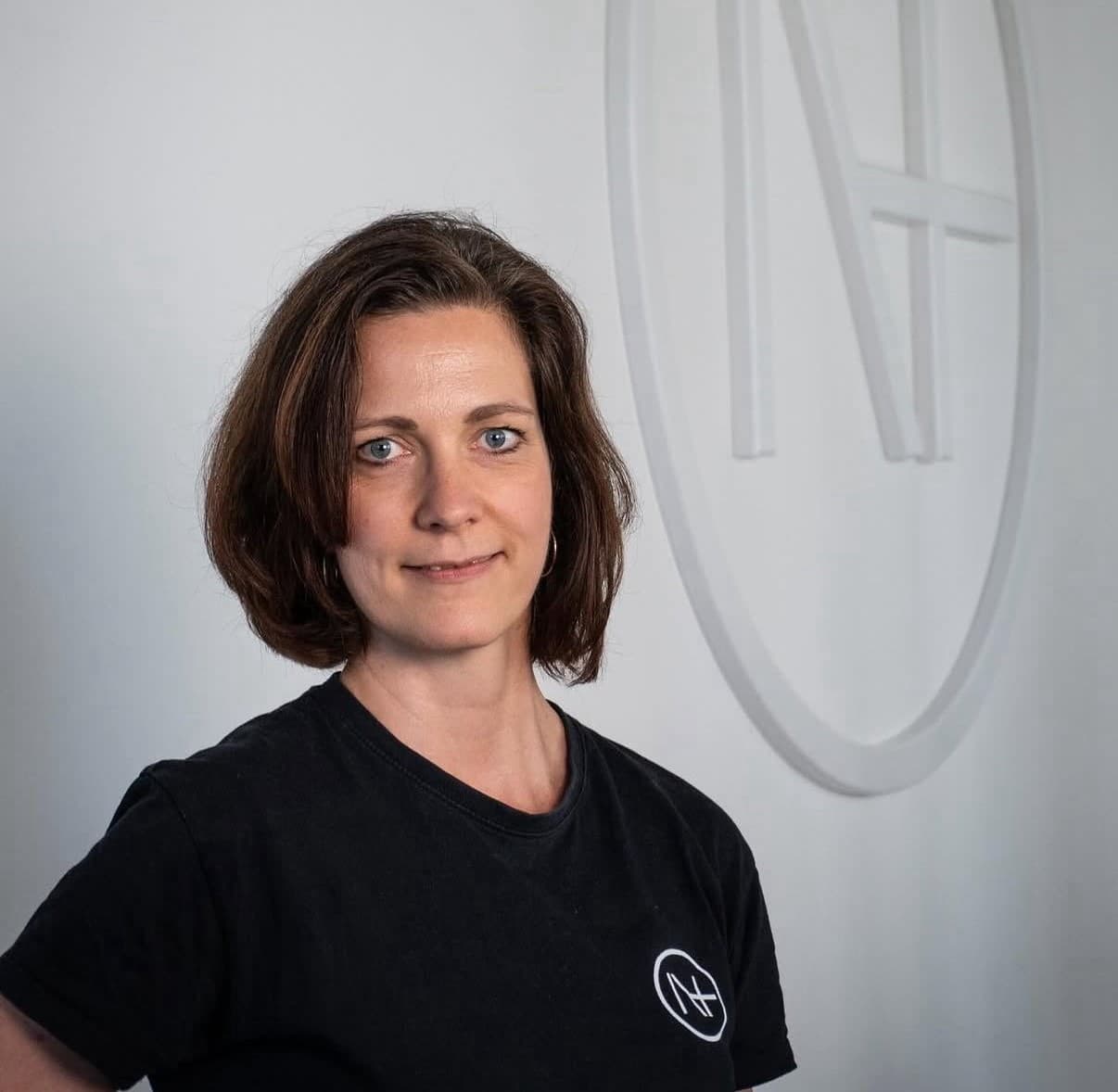
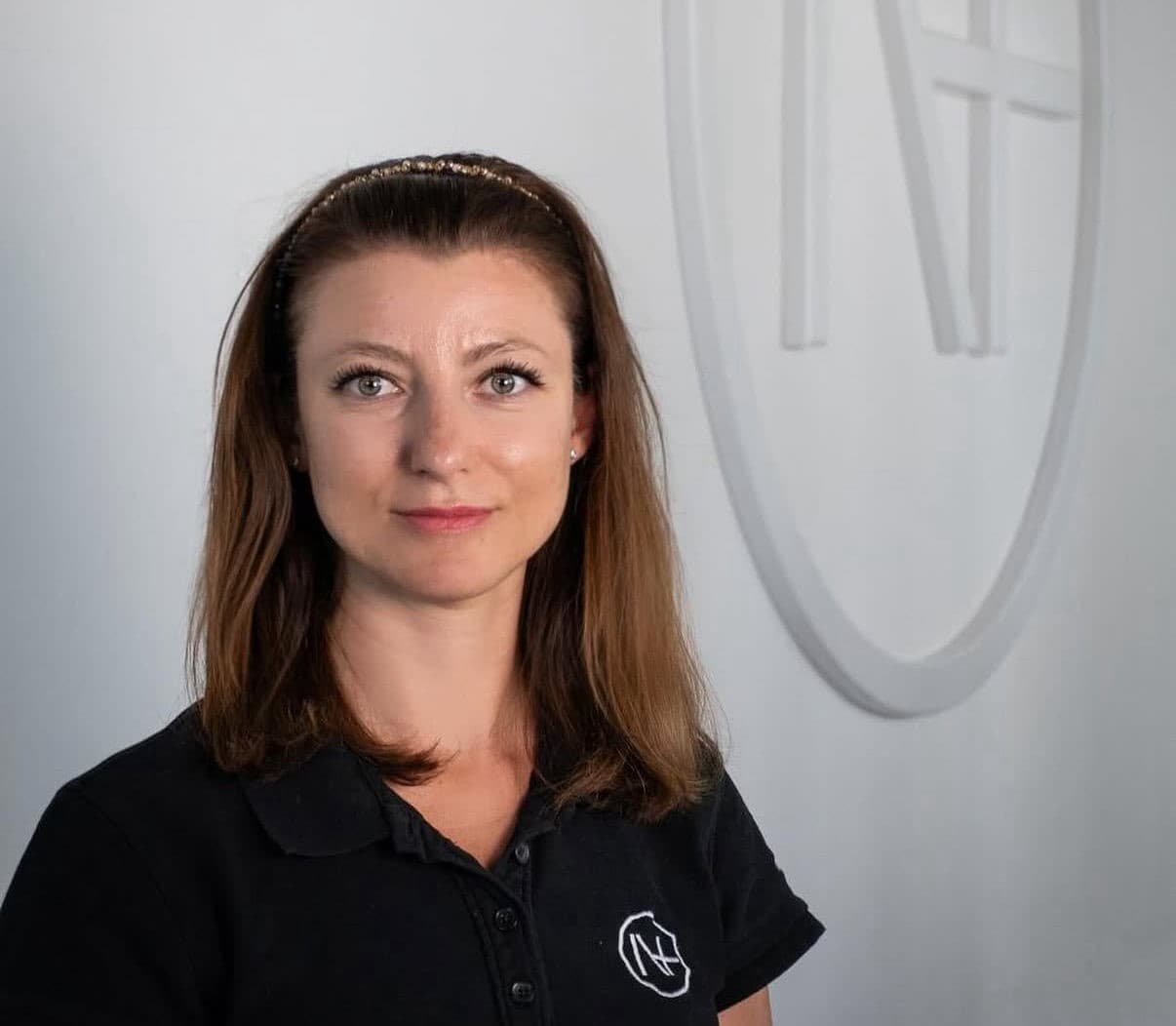
Nadja Fasdryok
Director of Operations & Ergotherapist · Zürich
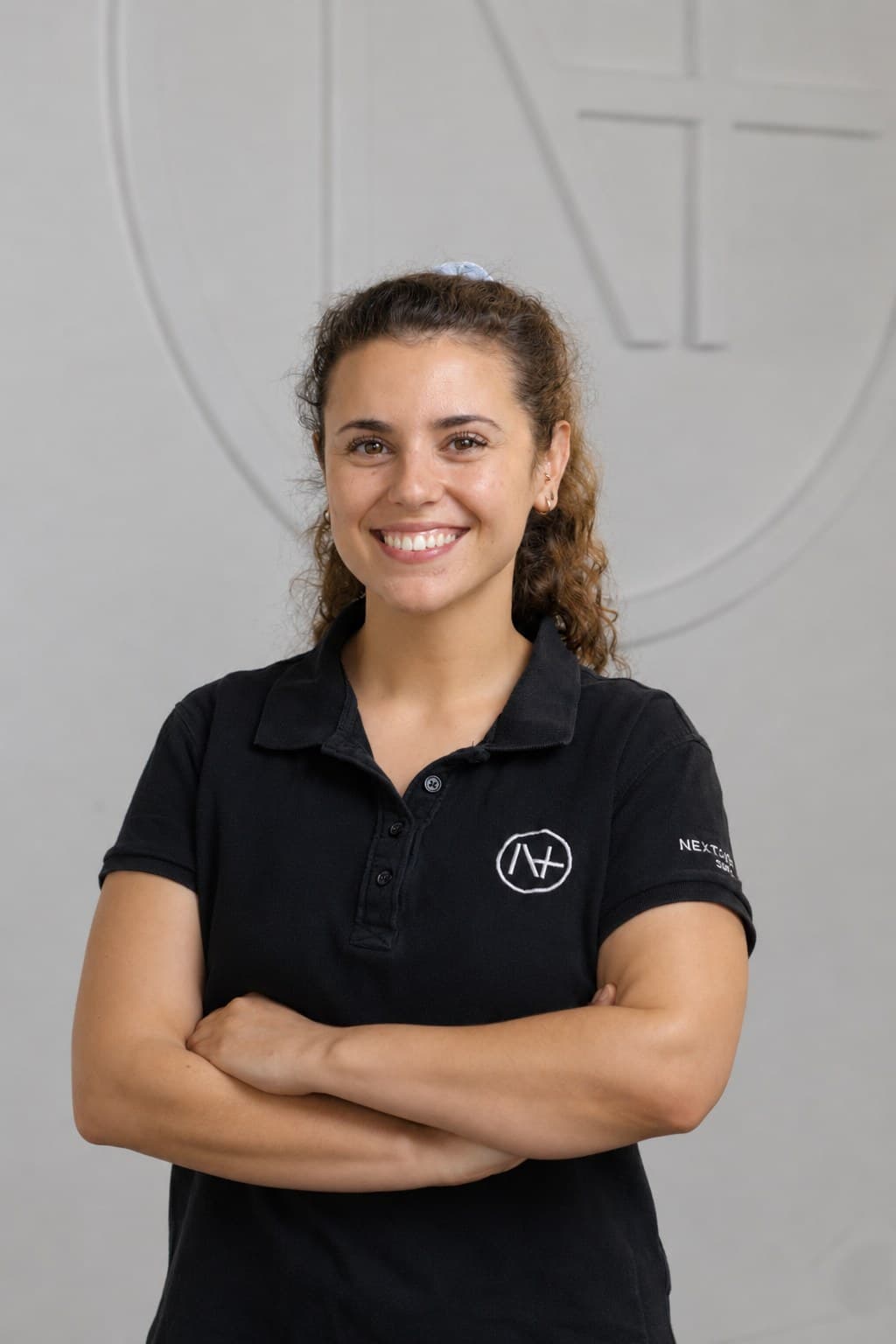
Anna Nikova
Head of Intensive Rehabilitation & Physiotherapist · Zürich
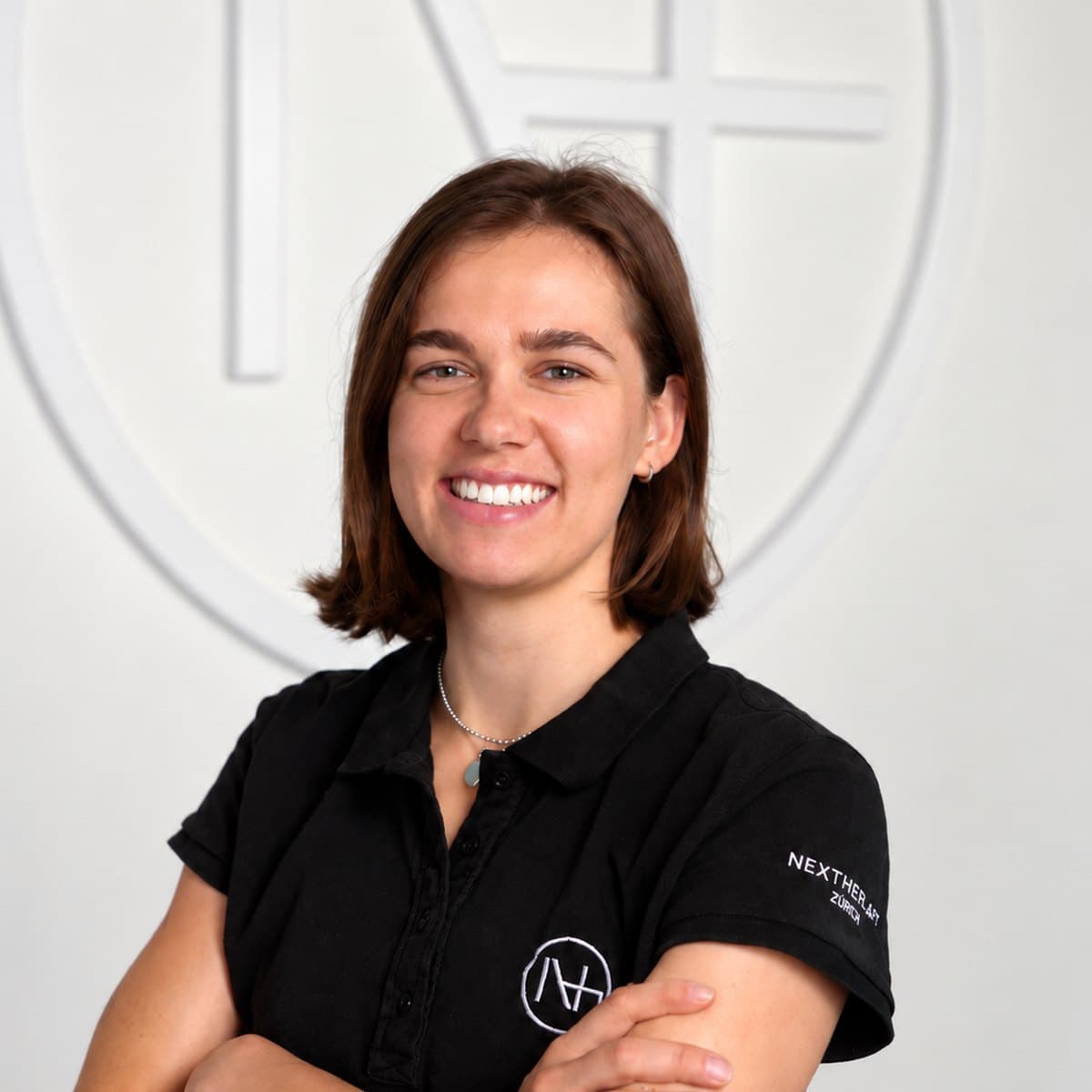
Carolina Sietra
Physiotherapist · Zürich
Greta Falz
Physiotherapist · Zürich
Get to know us.
In the free assessment we discuss your child’s situation, your goals and cost coverage.