If you are the parent of a child with cerebral palsy or another neurological condition, you have probably asked yourself this question many times:
Are we doing enough therapy?
And if you start searching online, it gets confusing very quickly.
You will find intensive programmes offering three or four hours of therapy a day for several weeks. You will see impressive videos and before and after stories. Some families travel abroad and spend CHF 8,000 to 16,000 or more on a single intensive therapy block.
Some of these programmes can be very good.
But the number of hours alone does not tell you whether the therapy will work.
What matters is what your child is actually doing during those hours.
What does "intensive therapy" really mean?
There is no universal definition.
Usually, intensive therapy means several hours of therapy per day, several days per week, for a period of two to four weeks.
That is very different from the traditional model of one or two physiotherapy or occupational therapy sessions per week.
The reason intensive therapy can be effective is actually quite simple.
The brain and nervous system learn through repetition.
If a child is learning to walk, improve balance, use an arm or hand, stand more independently or perform an everyday movement, they need to practise that movement many times.
Not five times.
Not ten times.
Potentially hundreds of times.
This is where the quality of the therapy becomes just as important as the number of hours.
Four hours of therapy is not necessarily better than one
Parents are often told that their child needs more therapy.
Sometimes that is true.
But more hours do not automatically mean better therapy.
If a child is exhausted after the first hour and spends the next three hours being moved through exercises with very little active participation, those extra hours may not provide the benefit parents expect.
The goal should be to achieve as many high quality, purposeful repetitions as the child can reasonably tolerate.
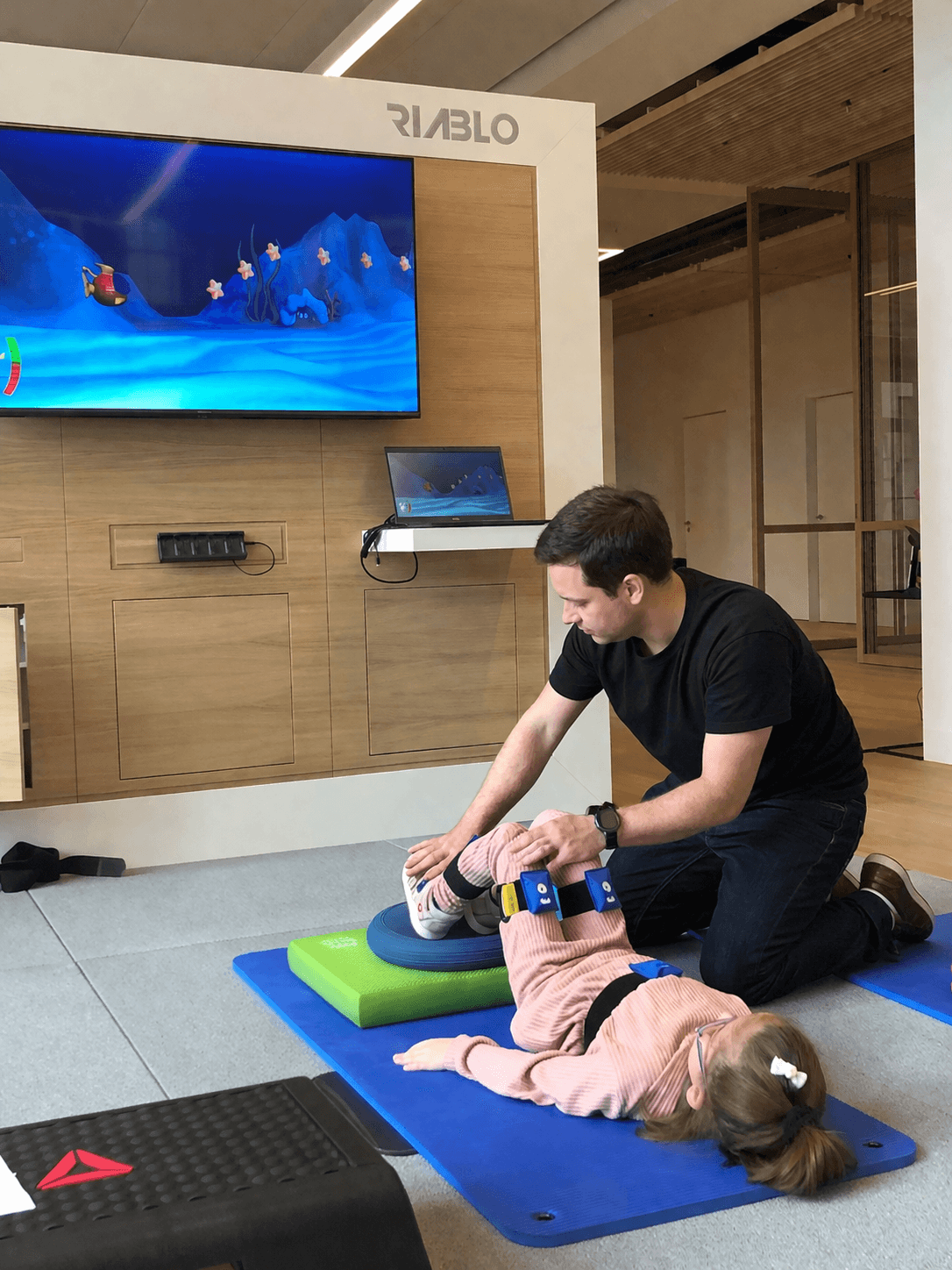
That is one of the reasons we use robotics at Nextherapy.
A child using a Lokomat Pediatric, for example, can perform a very large number of structured walking movements during a session while the therapist controls the level of support and adjusts the training to the child.
The technology does not replace the therapist.
It allows the therapist to do more.
So how many hours does my child actually need?
There is no responsible answer without assessing the child.
A five year old with cerebral palsy who is beginning to take steps has completely different needs from a fourteen year old working on endurance, balance or independence.
We look at the child’s goals, age, diagnosis, strength, endurance, school schedule and current level of function.
Then we decide what intensity makes sense.
For one child, that may mean several sessions each week.
For another, a short intensive period followed by a maintenance programme may make more sense.
And sometimes the answer is actually less therapy, but better therapy.
Children still need school, friends, family and a life outside rehabilitation.
Switzerland already has very good paediatric neurorehabilitation
Families sometimes assume that they have to travel abroad to find excellent intensive rehabilitation.
That is simply not always the case.
Switzerland has highly experienced paediatric specialists and established institutions such as the University Children’s Hospital Zurich (Universitäts-Kinderspital Zürich) and its rehabilitation services in Affoltern am Albis, as well as other excellent paediatric rehabilitation centres.
Nextherapy is another option for families who want highly specialised neurological physiotherapy and occupational therapy in an outpatient setting, particularly when high repetition and rehabilitation technology are important parts of the treatment plan.
Our clinics in Zurich and St. Gallen have more than 20 rehabilitation technologies and robotic systems. Depending on the child and their goals, therapy can work on walking, balance, standing, arm and hand function and everyday activities.
The point is not to use a robot because it looks impressive.
The point is to use technology when it allows a child to practise more of the right movement during the time they are in therapy.
Do intensive gains last?
They can.
But what happens after the intensive period matters.
A child may make noticeable progress during a concentrated three week programme and then gradually lose part of that progress if the new skills are not used afterwards.
That is why we think rehabilitation should not be built around a single dramatic intervention.
It should be a plan.
Intensive periods can be extremely useful. So can regular weekly therapy. So can home exercises. And robotics can help increase the number of repetitions achieved within a normal therapy session.
The right combination depends on the child.
And what does it cost?
This is an important difference for families in Switzerland.
International intensive programmes can cost families thousands of francs out of pocket, before flights, hotels and time away from work and school are even included.
For eligible children in Switzerland, prescribed physiotherapy and occupational therapy may be covered through the IV or health insurance depending on the diagnosis, indication and applicable insurance requirements.
At Nextherapy, there is no additional charge for using our robotic rehabilitation technology.
That includes technologies such as the Lokomat Pediatric.
You do not pay extra because your child trains with robotics.
Start by finding out what your child actually needs
Before deciding that your child needs three weeks of intensive therapy, four hours every day or another trip abroad, start with a much simpler question:
What is my child trying to achieve, and what is the most effective way to give them enough high quality practice to get there?
That is what we look at during our initial assessment.
Nextherapy offers a free 30 minute assessment for families who would like to understand what type and intensity of therapy may be appropriate for their child.
There is no obligation to continue treatment.
Sometimes we recommend intensive therapy. Sometimes regular weekly therapy makes more sense. And sometimes we will tell you that what your child is already doing is appropriate.
The goal is not to sell your child more therapy.
The goal is to make the therapy they receive count.
Talk to us about your situation.
In a free assessment we discuss your medical history, your goals, and your insurance coverage options.