Home Exercise After Neurorehabilitation: How to Make It Work When Motivation Runs Out
Published on
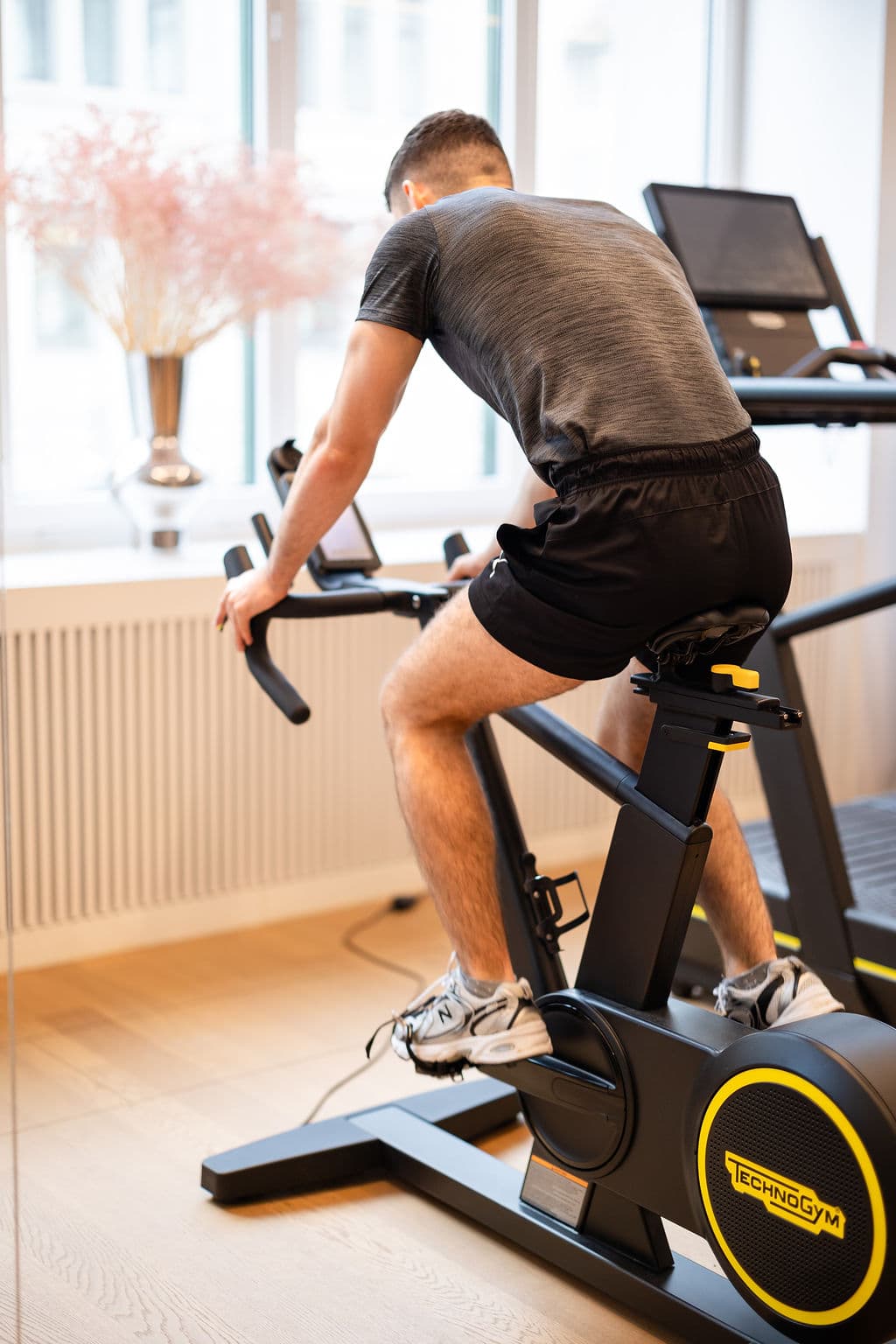
Most people leave their first few sessions determined. A sheet of exercises, a clear sense of what to do, real motivation to get moving. Then a few weeks pass, life reasserts itself, and the sheet sits on the kitchen counter more often than it gets used.
That is not a failure of willpower. Home exercise is genuinely harder than exercise done in a clinic, for reasons that have nothing to do with how much you want to recover.
Why home exercise is harder than clinic exercise
In a session, someone is watching. A therapist corrects your form before a habit sets in, keeps you honest about effort, and notices the day you are struggling before you do. None of that is there at home. You are also doing it in the same kitchen where the kettle needs filling and the same living room where the television is one remote press away, competing with a dozen other small demands on your attention.
Fatigue after a stroke or brain injury makes this harder still. The exercises that felt manageable in the clinic, where a session is the only thing happening, can feel like a much bigger ask at the end of an ordinary day.
What actually belongs in a home programme
A generic sheet of exercises is not a home programme. A useful one comes out of your assessment, targets the specific movement your therapist wants you working on that month, and contains few enough items that you can actually remember them without checking a printout.
Quality matters more than volume here. A small number of exercises done with real attention to form, most days, does more for neuroplasticity than a long list attempted once a week in a rush. If your programme feels overwhelming, that is worth raising with your therapist directly, because a plan you cannot sustain is not actually a plan.
When you keep missing days
Missing a day is not the problem. Treating a missed day as proof that the whole programme has collapsed is what actually derails people, because it turns one skipped session into a skipped week and then a skipped month.
Attaching the exercises to something you already do without thinking, brushing your teeth, the kettle boiling, a particular chair, removes the decision of when to start. A simple tally on the fridge or a habit-tracking app works better than relying on memory, because it shows you the pattern rather than just today’s excuse. A programme done at seventy per cent most weeks beats one abandoned after a perfect first fortnight.
Does it matter if my form is not perfect at home?
Some drift in quality is normal and not a reason to stop. Nobody moves as precisely without a therapist watching as they do with one beside them. What matters is catching drift before it becomes the new habit, which is why regular check-ins matter even once you feel confident at home.
A short video sent to your therapist, or five minutes at the start of your next session spent running through the home exercises, catches the small compensations that creep in unnoticed. Left uncorrected for months, those compensations can themselves become what you are practising.
What home exercise cannot replace
A home programme extends what happens in the clinic. It does not substitute for it. The repetition counts that drive change, several hundred precise movements in a single robot-assisted session, are simply not achievable unsupervised at home, and trying to force them without support is how people get hurt or discouraged.
Think of clinic sessions as where the heavy lifting of retraining happens, and home practice as what keeps that work from fading between visits. Neither one does the other’s job.
Where this leaves you
If your home programme has quietly stopped happening, that is common, and it is fixable. What usually needs adjusting is not your discipline, it is the plan: fewer exercises, a clearer trigger for when to do them, and a way to see your own pattern rather than guess at it.
That is something worth bringing to your next assessment. The free initial assessment at Nextherapy, in Zurich or St. Gallen, is also a good place to start if you are not yet a patient and want a home programme built around what your nervous system actually needs right now.
Talk to us about your situation.
In a free assessment we discuss your medical history, your goals, and your insurance coverage options.